
MicroBee Tech Team
Reading Time :
8 Minute
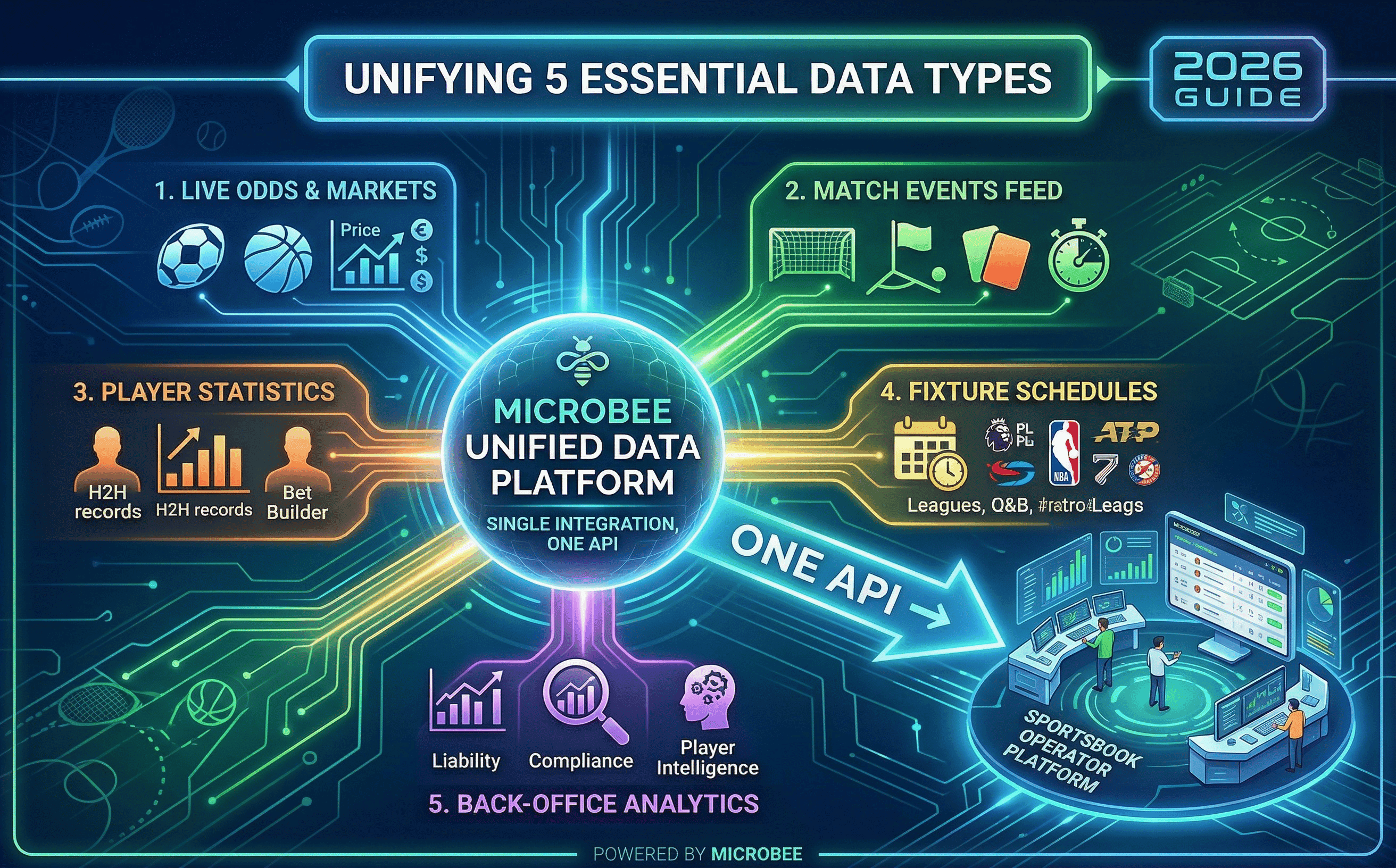
Bet software is the technology that powers sports betting operations — covering odds management, bet placement, in-play betting, risk controls, and settlement. For B2B operators in 2026, the choice is between licensed platform providers (2–4 weeks, full-stack) and custom builds (12–18 months, high cost). Platform-based bet software delivers faster revenue, lower risk, and built-in regulatory compliance for most operators.
Bet software is the engine behind every wager placed on a sportsbook. At its most basic, it manages the business logic of sports betting: present odds, accept bets, manage risk, settle results. In practice, modern bet software is far more complex — it must handle thousands of simultaneous in-play markets, millisecond odds updates, real-time liability monitoring, and seamless integration with player account and payment systems.
For B2B operators evaluating their options in 2026, this guide provides a clear framework: what bet software is and what it includes, the key differences between platform and custom approaches, what features separate competitive bet software from commodity solutions, and how to evaluate providers. We draw on MicroBee's experience deploying sportsbook platforms to 300+ operators across 50+ jurisdictions since 2014.
What Is Bet Software?
Definition: Bet software is the technology system that manages the core operations of sports betting: odds calculation and display, market creation and management, bet acceptance and validation, in-play live betting, cashout management, risk and liability monitoring, and bet settlement. It is accessed either as a standalone module (bet software only) or as part of an integrated platform that also covers player accounts, payments, and back-office.
Core Components of Bet Software
Odds Engine
The odds engine calculates and updates betting prices in real time — from pre-match markets that open days before an event to in-play markets that shift every few seconds during live action. Quality bet software uses a real-time data feed as its input and applies algorithmic pricing rules and operator-configured margins to produce the odds bettors see. Sub-second update speed for in-play markets is the benchmark for competitive live betting, as explored in our live betting software guide.
Bet Placement and Validation Engine
The bet placement engine receives wagers from bettors and processes them in real time: validating stake amounts against configured limits, checking liability exposure across the event, running the acceptance or rejection decision, and recording the bet. For accumulators and system bets, the engine must handle complex multi-leg validation simultaneously — a process that must complete in milliseconds to avoid bettor frustration.
In-Play (Live) Betting Module
In-play betting generates the majority of sportsbook revenue — estimates consistently place live betting at 60–75% of total sportsbook turnover. Bet software designed for competitive live betting must handle rapid market updates, immediate suspension on key events (goal, red card, injury), seamless cashout across open live bets, and bet acceptance decisions that match the speed of market movement. This is covered in depth in our live betting software anatomy guide.
Risk Management and Liability Engine
The risk management layer applies the operator's trading rules at the point of bet acceptance: maximum stakes per event and market, liability exposure thresholds that trigger odds adjustment or market suspension, and bettor profiling that identifies sharp betting activity for limits management. Sophisticated bet software allows granular configuration by sport, market type, and individual bettor — without requiring developer intervention for each change.
Cashout and Bet Management
Cashout functionality has become a standard bettor expectation on competitive sportsbooks. Bet software must calculate fair cashout offers in real time based on current odds and remaining bet legs, present them to bettors within the acceptable latency window, and process accepted cashouts instantly. For accumulators with ongoing in-play legs, real-time cashout calculation is computationally intensive — an area where platform bet software significantly outperforms legacy custom builds.
Settlement Engine
Automatic bet settlement triggers on event completion — mapping official results to open bets, applying correct score rules, handling dead heats and void markets, and releasing winnings to player wallets. Settlement accuracy is more operationally critical than settlement speed — incorrect settlements generate disputes, regulatory exposure, and bettor trust damage that is difficult to recover.
Bet Software vs Betting Platform: The Distinction
Key difference: Bet software is the core betting engine — odds, placement, risk, settlement. A betting platform combines the betting engine with player account management (PAM), payment processing, back-office analytics, bonus management, and compliance infrastructure. Most B2B operators need a platform, not standalone bet software — the PAM and compliance layers are not optional in regulated markets.
Layer | Bet software only | Integrated platform (MicroBee) |
Odds engine | Yes | Yes — 50+ sports |
Bet placement & risk | Yes | Yes — configurable |
Player account (PAM) | No — requires separate PAM | Yes — included |
Payments | No — separate integration | Yes — 50+ methods |
Compliance | No — operator responsibility | Yes — MGA/UKGC built in |
Time to market | Longer (must add PAM, payments) | 2–4 weeks — all layers included |
For a comprehensive comparison of bet software deployment approaches, see our guide to building vs buying betting platform software and our gambling software overview.
How to Evaluate Bet Software Providers
Evaluation checklist: When selecting bet software: (1) In-play betting capability — latency, cashout, suspension speed; (2) Risk management sophistication — stake limits, bettor profiling, liability monitoring; (3) Integration type — standalone software vs unified platform; (4) Regulatory licensing — MGA/UKGC B2B credentials; (5) Integration timeline with live references; (6) Back-office quality — demo real-time trading dashboard; (7) 24/7 operational support model.
• In-play capability: This is where competitive bet software separates from commodity software. Test sub-market suspension times, cashout calculation speed, and market resilience under simulated peak load (major tournament finals).
• Risk management tools: Can operators configure stake limits, bettor profiling categories, and market suspension thresholds without developer intervention? Rigid risk management configurations limit trading flexibility and create operational bottlenecks.
• API quality: The quality of the betting API is the primary determinant of integration speed. Request documentation, sandbox access, and developer references from recent deployments.
• Regulatory compliance: For European regulated markets, bet software must operate within MGA and UKGC compliance frameworks. MicroBee's platform holds both B2B licences (MGA/B2B/203/2016) — compliance is built in, not bolted on.
• Live operator references: Ask for references from operators who have been live for 12+ months in markets similar to yours. Our best sportsbook software providers guide provides a broader market context.
MicroBee's Bet Software
MicroBee's sportsbook platform delivers a complete bet software stack — odds engine, in-play module, bet placement, risk management, and settlement — as a native component of its unified platform. 300+ operators have validated its performance across 50+ jurisdictions since 2014.
• Sub-second in-play odds — WebSocket push delivery across 50+ sports
• Bet builder and same-game parlay support — across major football leagues and key sports
• Configurable risk management — stake limits, bettor profiling, real-time liability monitoring via data intelligence back-office
• Cashout — real-time calculation across all open in-play and pre-match bets
• Automatic settlement — MGA/UKGC-compliant audit trails, sub-60-second settlement on event completion
• 2–4 week integration — unified platform means bet software, PAM, and payments connect simultaneously
Frequently Asked Questions
What is bet software?
Bet software is the technology that manages core sports betting operations — odds display, bet placement, in-play betting, risk management, and settlement. Modern B2B bet software is delivered via licensed platform providers. MicroBee's platform: microbee.net/sportsbook.
What features should bet software include?
Core bet software features include: real-time odds engine (pre-match and in-play), in-play betting with sub-500ms market updates, cashout functionality, liability management and bettor profiling, bet builder and accumulator support, and automatic settlement with compliance audit trails.
How long does bet software integration take?
With MicroBee, 2–4 weeks. Custom builds: 12–18 months. The primary variables are API documentation quality and integration scope. See our betting API integration guide.
What is the difference between bet software and gambling software?
Bet software specifically refers to the sports betting engine. Gambling software is the broader term covering sports betting, casino games, player accounts, payments, and compliance infrastructure. See our gambling software guide.
Does MicroBee provide bet software as a standalone product?
MicroBee provides bet software as a core component of its unified sportsbook platform — covering odds, in-play, risk management, and settlement alongside PAM, payments, and compliance through a single integration. Contact MicroBee for a bespoke discussion of your requirements.
Summary
Bet software is the core commercial engine of any sportsbook. Its in-play performance, risk management sophistication, and integration quality determine competitive position in live betting markets — which represent the majority of sportsbook turnover. For B2B operators choosing bet software in 2026, the most important question is not which provider has the most features, but which provider has validated live operator references in markets like yours, delivers it through a clean API in 2–4 weeks, and bundles it within a platform that covers PAM and compliance from day one. MicroBee meets all three criteria.
To discuss your bet software requirements, speak to MicroBee's team.