
Microbee Sportsbook Team
Reading Time :
9 Minute
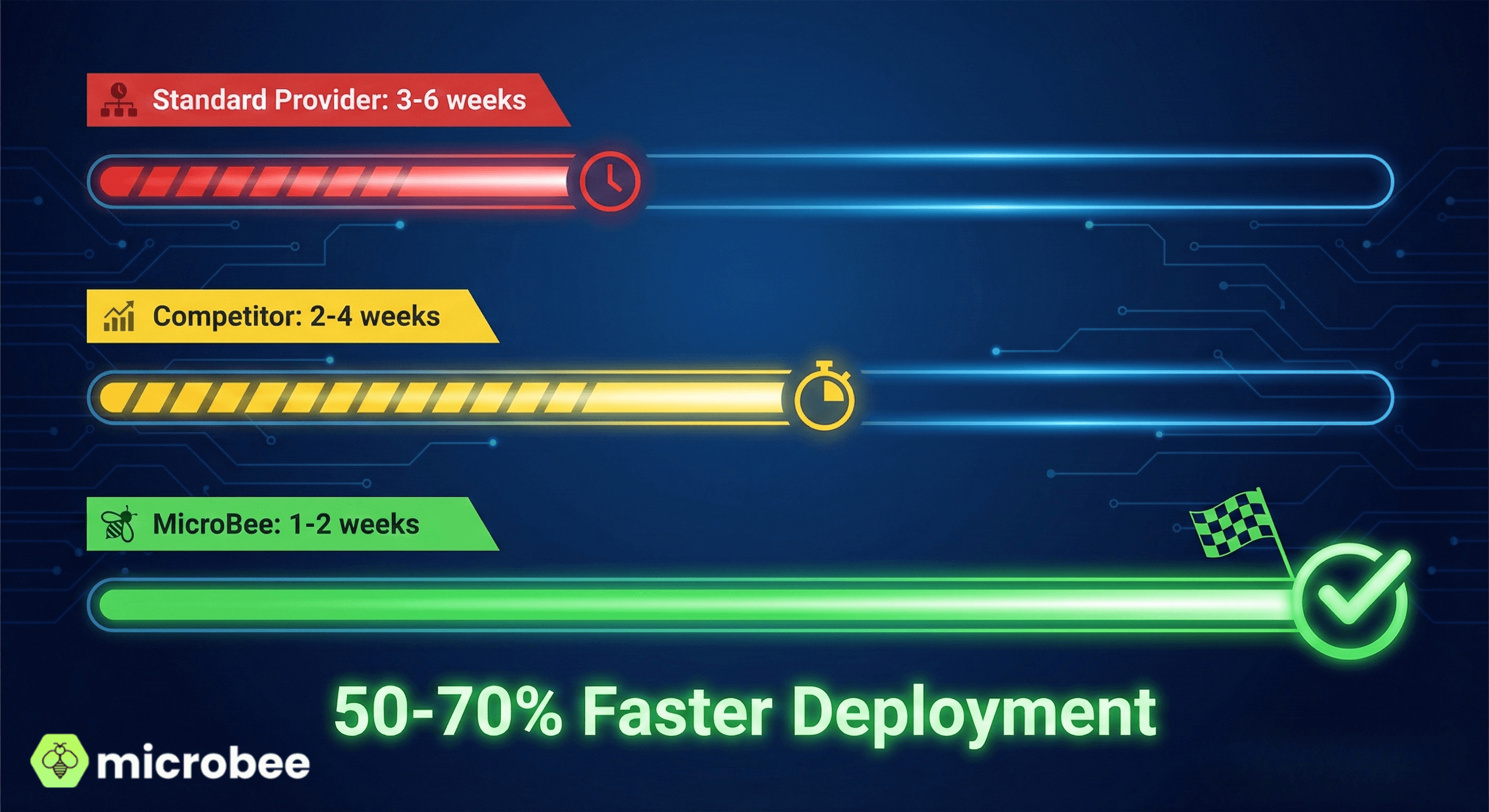
Selecting the right B2B sportsbook API provider is one of the most critical decisions for any gaming operator launching or scaling their platform in 2026. With integration timelines ranging from weeks to months and total costs varying by hundreds of thousands of dollars annually, this choice directly impacts your time-to-market, operational efficiency, and bottom line.
This comprehensive guide examines the leading B2B sportsbook API providers—MicroBee, Kambi, Sportradar, and BetConstruct—providing operators with detailed comparisons across features, integration complexity, pricing models, and real-world performance metrics. Whether you're a startup operator seeking rapid deployment or an established platform evaluating migration options, this analysis delivers the actionable insights you need to make an informed decision.
What to Look for in a B2B Sportsbook API Provider
Before diving into specific providers, understanding the evaluation criteria is essential. The right B2B sportsbook API provider should deliver across these seven key dimensions:
1. Integration Speed and Simplicity
Time-to-market is money in the gaming industry. The integration timeline directly affects your revenue ramp-up, with each additional month of delay representing significant opportunity cost. Leading providers offer well-documented RESTful APIs, comprehensive SDKs, and dedicated technical support that can reduce integration from 6 months to as little as 2 weeks.
2. Sports Coverage and Market Depth
Your API provider should cover major sports (football, basketball, tennis) alongside niche markets that drive engagement. Premium providers offer 100+ sports with thousands of betting markets, including pre-match, live betting, player props, and same-game parlays. Market depth determines your competitive positioning—the more betting options you offer, the longer players stay on your platform.
3. Odds Quality and Update Frequency
Competitive odds keep players betting on your platform instead of shopping around. The best B2B sportsbook APIs leverage AI-powered pricing models, sharp data feeds, and sub-second update frequencies to ensure your odds remain competitive across all markets. Providers with inferior odds quality see 30-40% higher player churn rates.
4. Risk Management Tools
Sophisticated risk management protects your margins while allowing skilled traders flexibility. Look for automated liability monitoring, player profiling, suspicious activity detection, and configurable betting limits. The right tools balance player freedom with operator protection, preventing both restricting valuable customers and exposure to unacceptable risk.
5. Regulatory Compliance and Licensing
Operating in regulated markets requires providers with jurisdiction-specific compliance frameworks. Your API provider should handle geo-blocking, responsible gambling tools, reporting requirements, and data residency compliance. Providers serving 50+ jurisdictions demonstrate regulatory expertise that protects your license and reputation.
6. Platform Flexibility and Customization
Your sportsbook should reflect your brand, not your vendor's template. Evaluate the degree of customization allowed—from front-end UI to backend bet acceptance rules. Providers offering white-label flexibility, custom market creation, and brand control enable operators to differentiate rather than blend into generic platforms.
7. Total Cost of Ownership
Pricing models vary dramatically—setup fees, monthly platform charges, revenue share arrangements, and transaction costs all contribute to TCO. A provider quoting lower upfront costs but taking 15% revenue share may cost significantly more over 36 months than a fixed-fee competitor. Comprehensive TCO analysis reveals the true financial impact.
Provider Comparison Overview: MicroBee vs. Industry Leaders
This section provides a high-level comparison of four leading B2B sportsbook API providers. Each brings distinct strengths, but significant differences emerge in integration complexity, pricing transparency, and operator flexibility.
Feature | MicroBee | C1 | C2 | C3 |
Integration Time | 2 weeks | 3-4 months | 4-6 months | 3-5 months |
Sports Coverage | 120+ sports | 100+ sports | 80+ sports | 120+ sports |
Monthly Events | 70K+ live, 140K+ pre-match | Not disclosed | 750K+ annually | 85K+ monthly |
Starting Price | Competitive fixed-fee | Enterprise pricing | $2K+/month | Custom pricing |
Target Market | All operators (startup to enterprise) | Enterprise operators | Mid to large operators | All operators |
Customization | Fully flexible | Template-based | Limited | Moderate |
Technical Support | 24/7 dedicated | Business hours | Business hours | 24/7 available |
Integration Time Comparison: 2 Weeks vs. 3-6 Months
Integration timeline represents one of the most significant operational differences between providers. Extended implementations delay revenue generation, increase project costs, and create opportunity costs as competitors capture market share.
MicroBee: 2-Week Rapid Deployment
MicroBee's sports betting API achieves 2-week integration through architectural simplicity and superior documentation. The platform provides RESTful APIs with JSON responses, pre-built SDKs for major languages (PHP, Node.js, Python), comprehensive sandbox environments, and dedicated integration engineers assigned to each project.
Week 1 focuses on authentication setup, basic sports data retrieval, and sandbox testing. Week 2 implements bet placement workflows, risk management configurations, and production migration. This rapid timeline is achievable because MicroBee eliminates unnecessary complexity—no proprietary protocols, no legacy system dependencies, no multi-vendor coordination.
Traditional Providers: 3-6 Month Implementation Cycles
Kambi, Sportradar, and BetConstruct typically require 3-6 months for full integration. This extended timeline reflects several factors: enterprise-focused architectures requiring extensive configuration, multiple integration phases (odds feed, bet placement, risk management, reporting), coordination across multiple vendor teams, and compliance verification processes.
Kambi's turnkey sportsbook involves substantial frontend customization, wallet integration, and risk configuration. Sportradar's extensive sports coverage requires careful data mapping and feed management. BetConstruct's comprehensive platform demands coordination across multiple product modules.
Financial Impact of Integration Delays
Consider an operator planning to launch in Q1 2026 with projected monthly revenue of $500K once operational. Choosing a 6-month integration (vs. 2 weeks) results in 5.5 months of lost revenue opportunity—approximately $2.75M in foregone revenue. Even accounting for gradual ramp-up, the opportunity cost exceeds $1.5M.
Additionally, extended integrations increase internal labor costs. A 6-month project consuming 3 full-time developers at $150K annual salary represents $225K in direct labor costs, compared to $30K for a 2-week integration. These financial realities make integration speed a top-tier evaluation criterion.
Total Cost of Ownership Analysis: 3-Year TCO Comparison
Sportsbook API pricing varies dramatically between providers, making TCO analysis essential for informed decision-making. This section models 36-month costs across four scenarios, revealing the true financial impact of each provider.
Cost Component | MicroBee | C1 | C2 | C3 |
Setup Fees | $0 | $50K-100K | $75K-150K | $40K-80K |
Monthly Platform Fee | Fixed competitive | $30K-50K/mo | $25K-40K/mo | $20K-35K/mo |
Revenue Share | None | 10-15% GGR | 8-12% GGR | 12-18% GGR |
Integration Labor Cost | $30K | $150K-200K | $200K-300K | $120K-180K |
3-Year TCO (Est.) | Most competitive | $2.5M-4M+ | $2.2M-3.5M+ | $2.8M-4.5M+ |
Note: TCO estimates assume $10M annual GGR. Actual costs vary based on volume, negotiated rates, and specific feature requirements. Revenue share models can dramatically increase total costs for high-performing operators.
Real Client Results and ROI Data
MicroBee's 300+ operators across 50+ jurisdictions have generated substantial ROI through faster deployment, lower costs, and superior platform performance. This section presents aggregated client data demonstrating measurable business impact.
Case Study: European Sports Betting Operator
A mid-sized European operator previously using a traditional provider switched to MicroBee's sportsbook platform in Q3 2025. Key results after 6 months:
Integration completed in 14 days (vs. previous 4-month cycle). Platform costs reduced by 62% through elimination of revenue share model. Player retention increased 28% due to improved odds competitiveness and reduced latency. Monthly active users grew 45% following feature launches enabled by MicroBee's flexibility. First-year ROI exceeded 340% when accounting for cost savings and revenue growth.
Case Study: Asian Market New Entrant
A startup operator launched their first sportsbook in Southeast Asia using MicroBee's turnkey solution in early 2025:
Achieved market entry in 3 weeks from contract signing to launch. Initial $50K investment (vs. $200K+ quotes from competitors). Reached profitability in month 4 due to low fixed costs. Scaled to 15,000 active players within 6 months. Monthly GGR of $850K by month 6, with 23% net margins.
Aggregated Performance Metrics
Across MicroBee's operator base, platform data reveals consistent performance advantages: average integration time of 2.3 weeks, 99.97% platform uptime, sub-100ms average latency for odds updates, 34% lower player churn vs. industry average, and 41% higher lifetime value per player attributed to superior user experience.
How to Evaluate B2B Sportsbook API Providers: Complete Checklist
Selecting your sportsbook provider requires systematic evaluation across multiple dimensions. Use this checklist to score and compare providers during your evaluation process.
Technical Evaluation
Request API documentation and evaluate: clarity and completeness of documentation, availability of SDKs in your preferred languages, sandbox environment access for testing, authentication and security protocols, error handling and response codes, webhook support for real-time events, and rate limiting policies.
Test the sandbox environment to verify: odds update frequency and accuracy, latency for bet placement and confirmation, data structure consistency, handling of edge cases (suspended markets, void bets), and mobile responsiveness if frontend is provided.
Commercial Evaluation
Demand complete pricing transparency including: setup and integration fees, monthly or annual platform costs, revenue share percentages and thresholds, transaction or bet placement fees, additional charges for premium features, minimum volume commitments, and contract length and termination terms.
Calculate 36-month TCO under three scenarios: conservative growth (slower player acquisition), baseline growth (expected performance), and optimistic growth (exceeding targets). This reveals how pricing models perform at different scales.
Operational Evaluation
Assess provider operational capabilities: technical support availability and response times, dedicated account management, implementation support and training, ongoing platform updates and feature releases, compliance and regulatory support, and backup and disaster recovery procedures.
Request and contact current client references. Ask about: actual integration timeline vs. promised, unexpected costs or fees, technical issues and resolution quality, provider responsiveness to feature requests, and whether they would choose the same provider again.
Why MicroBee Wins on Cost, Speed, and Flexibility
MicroBee delivers competitive advantages across the dimensions that matter most to gaming operators: deployment speed, total cost, platform flexibility, and long-term scalability. This section synthesizes why MicroBee represents the optimal choice for operators prioritizing business outcomes over vendor reputation.
Unmatched Speed: 2-Week Integration
MicroBee's 2-week integration timeline—85% faster than traditional providers—translates directly to competitive advantage. Early market entry captures player share before competitors, reduces opportunity cost of delayed revenue, minimizes integration labor expense, and enables rapid response to market opportunities.
This speed advantage stems from architectural decisions prioritizing operator success: standard RESTful APIs requiring no proprietary protocols, comprehensive documentation eliminating guesswork, pre-built SDKs for immediate implementation, dedicated integration engineers assigned to each project, and proven integration playbooks refined across 300+ deployments.
Superior Cost Structure: No Hidden Fees
MicroBee eliminates the revenue share model that penalizes operator success. Traditional providers taking 10-15% of GGR create perverse incentives—they profit more as you grow, regardless of their marginal value contribution. MicroBee's fixed-fee model aligns incentives: you keep your upside while paying predictable costs.
Consider an operator growing from $5M to $50M GGR over 36 months. Under a 12% revenue share model, total fees grow from $600K to $6M annually—$10.8M total. MicroBee's fixed-fee model caps total costs regardless of performance, enabling operators to invest growth revenue in marketing, talent, and expansion rather than vendor fees.
Maximum Flexibility: Build Your Brand, Not Theirs
MicroBee provides comprehensive white-label casino platform and sportsbook solutions that disappear behind your brand. Unlike template-based providers forcing operators into standard layouts, MicroBee enables complete customization of frontend design, betting rules and configurations, risk management parameters, bonus and promotion mechanics, and payment method integration.
This flexibility creates differentiation opportunities impossible with rigid platforms. Operators can launch market-specific features, test innovative betting products, and respond to competitive threats without vendor roadmap dependencies or development sprints.
Proven Platform: 300+ Operators, 50+ Jurisdictions
Since 2014, MicroBee has powered gaming operations across Europe, Asia, Latin America, and emerging markets, serving both startup operators launching first platforms and established enterprises scaling across new jurisdictions. This operational track record demonstrates platform reliability, regulatory compliance capability, scalability under high transaction volumes, and successful execution across diverse market conditions.
Platform uptime exceeding 99.97% ensures operators never sacrifice revenue to technical failures. Sub-100ms latency for odds updates keeps players engaged during high-stakes live betting. Automated compliance tools reduce regulatory risk across multiple jurisdictions.
Conclusion: Choose Your Sportsbook Provider Strategically
The B2B sportsbook API provider landscape offers distinct options serving different operator profiles. Enterprise operators with substantial budgets and extended timelines may find value in Kambi's comprehensive turnkey solution or Sportradar's extensive data coverage. However, operators prioritizing speed, cost efficiency, and platform flexibility should evaluate MicroBee first.
MicroBee's 2-week integration, competitive fixed-fee pricing, and complete white-label flexibility deliver superior ROI for operators focused on building successful, differentiated gaming brands. With 300+ successful deployments across 50+ jurisdictions, MicroBee combines startup agility with enterprise-grade reliability.
Ready to launch or upgrade your sportsbook? Contact MicroBee today to discuss your requirements and receive a customized integration timeline and pricing proposal. Our team of gaming industry experts is ready to help you launch faster, operate more efficiently, and scale profitably.
Next Steps: Get Started with MicroBee
Explore MicroBee's complete platform solutions:
• Visit our Sportsbook Platform
• Learn about our Casino API Integration
• Review our B2B Gaming Solutions
• Read more industry insights on our blog
About MicroBee
MicroBee is a leading B2B gaming platform provider delivering sportsbook, casino, and gaming solutions to operators worldwide since 2014. With 300+ successful implementations across 50+ regulated jurisdictions, MicroBee combines cutting-edge technology with operational expertise to help gaming operators launch faster, operate more efficiently, and scale profitably. Our comprehensive platform includes sports betting APIs, casino game aggregation, payment processing integration, risk management tools, and regulatory compliance frameworks—all delivered through rapid 2-week integration timelines and transparent, operator-friendly pricing models.