
Microbee Tech Team
Reading Time :
10 Minute
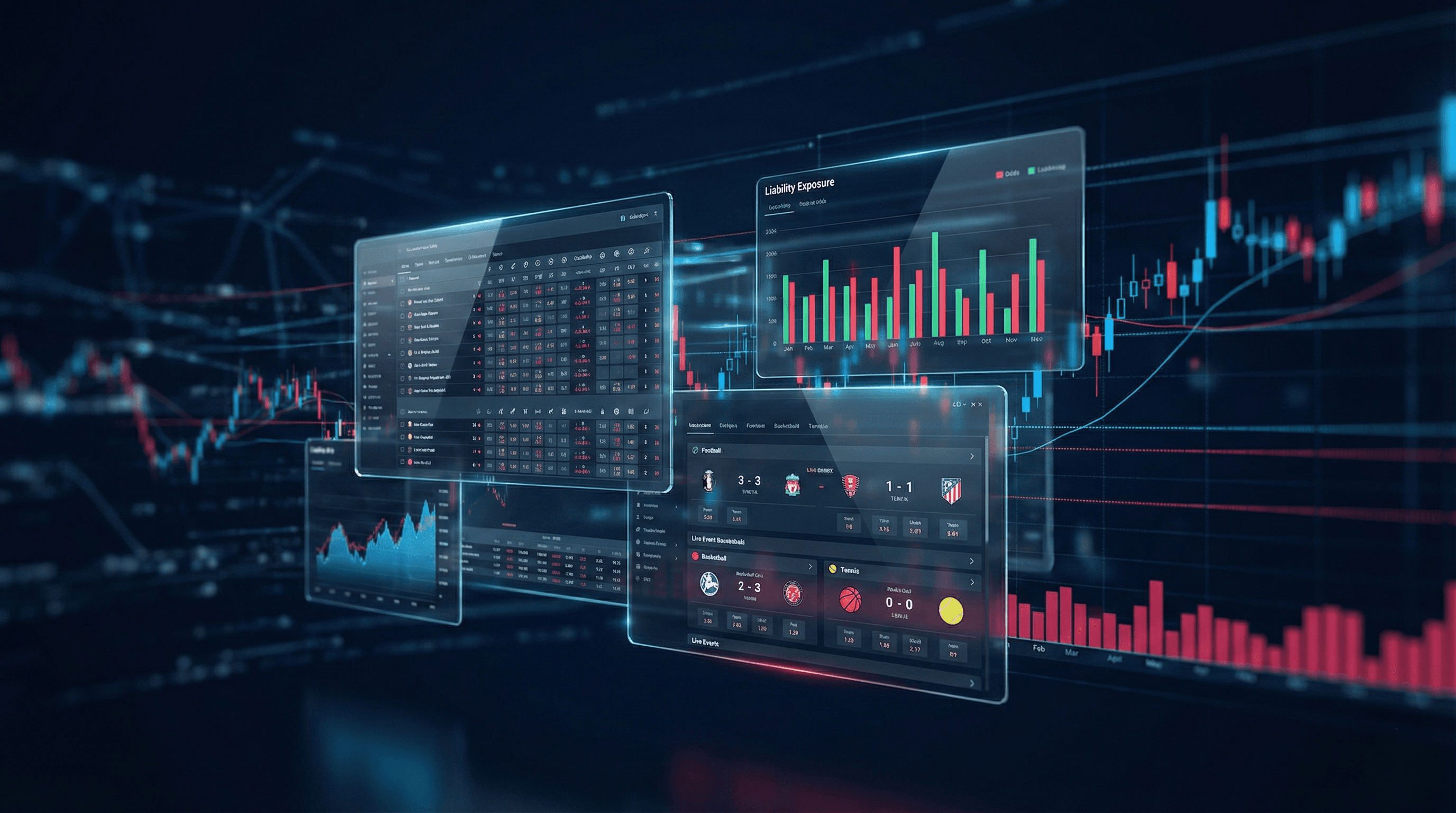
Running a profitable sportsbook is fundamentally a trading business. Every bet accepted is a financial position that must be managed, hedged, or offset against other positions. The quality of a sportsbook's trading platform — the tools, dashboards, and automation capabilities available to its trading team — directly determines its ability to manage risk and protect margins.
This guide covers what professional sportsbook traders need, how to evaluate sportsbook trading platforms against each other, and how MicroBee's trader-friendly interface delivers the tools that modern operations demand.
What Professional Sportsbook Traders Need
A trading team's daily work involves managing thousands of markets simultaneously across multiple sports and time zones. The tools they use must meet a very specific set of requirements:
• Speed: Odds changes must be applied across all channels in milliseconds. Slow updates create arbitrage opportunities.
• Visibility: Traders need simultaneous visibility into position exposure, liability per market, and competitor pricing.
• Control: Granular control over which markets are open, which bets are auto-accepted, and which require manual review.
• Automation: Routine pricing updates and risk actions must be automatable to free traders for high-value decisions.
• Data: Real-time feeds from multiple sports data providers inform every trading decision.
Manual vs Automated Trading
Manual Trading
In manual trading, human traders review incoming bets and market positions, making odds adjustments and liability decisions themselves. This approach is appropriate for:
• High-value sharp bets requiring human judgement
• Unusual or illiquid markets with limited comparative data
• Situations where automated systems flag uncertainty
Automated Trading (Trading Algorithms)
Modern sportsbooks use algorithmic automation for the majority of routine pricing decisions. Automation is applied to:
• Odds compilation from multiple data feeds with weighted averaging
• Automatic odds movement in response to bettor imbalance
• Liability-triggered price changes (e.g., when one side accumulates 60%+ of stakes)
• Pre-match odds copying from sharp markets (Pinnacle, Asian handicap lines)
Hybrid Approach (Best Practice)
The most sophisticated operations combine both: automated algorithms handle routine markets and standard events while experienced traders focus on premium events, unusual activity, and exception handling. This delivers speed at scale while retaining human judgement where it matters most.
Real-Time Risk Exposure Monitoring
Risk exposure monitoring is the core function of any sportsbook trading platform. Traders must see their liability position — how much they stand to lose if a specific outcome wins — at all times and in real time.
Essential Risk Monitoring Features |
✓ Real-time liability display by market, event, and outcome |
✓ Net position calculation (aggregate stake-weighted exposure) |
✓ Automated alerts when liability crosses configurable thresholds |
✓ Bettor profiling: identify sharp (professional) vs recreational bettors |
✓ Correlation analysis: detect multi-bet liability accumulation across accounts |
✓ In-play exposure tracking: liability shifts continuously as events progress |
✓ Geographic exposure mapping: identify regional concentration risks |
Odds Compilation and Adjustment
Odds compilation is the process of converting raw probability assessments into betting odds that include the sportsbook's margin. Professional trading platforms support:
Data Feed Integration
Odds compilation starts with data. Tier-1 trading platforms connect to multiple sports data providers simultaneously:
• Sportradar, Stats Perform, IMG Arena: Primary event and statistical data
• Betfair, Pinnacle: Market price references for efficient markets
• Asian bookmaker lines: Sharp money reference for football, tennis, basketball
Margin Setting and Configuration
• Sport-level margin configuration (football at 4%, tennis at 5%, etc.)
• Market-level margin adjustment (main markets vs specials vs props)
• Event-importance pricing (World Cup final vs lower league match)
Odds Rounding and Display
Odds must be rounded to the correct decimal or fractional display format depending on jurisdiction. A good trading platform handles this automatically with configurable rounding rules.
Competitor Odds Monitoring
Maintaining competitive pricing requires continuous monitoring of what other bookmakers are offering. Features to look for:
• Automated odds feed comparison: Real-time comparison of your odds vs Bet365, William Hill, Pinnacle, etc.
• Overround comparison: Are you offering better or worse value than competitors? By how much?
• Alert on significant deviation: Notify traders when your odds drift beyond a threshold vs market consensus.
• Automatic odds mirroring: For operators who prefer to follow rather than set the market.
Alert Systems and Notification
A modern sportsbook trading platform generates alerts across multiple dimensions:
Alert Type | Trigger Condition | Required Action |
Liability threshold | Net liability > configured maximum | Manual review or odds suspension |
Sharp money alert | Large bet from profiled sharp account | Manual odds review |
Odds drift alert | Your odds deviate >5% from market | Recheck compilation source |
Data feed failure | Sports data provider goes offline | Switch to backup feed |
In-play incident | Red card, goal, injury in covered event | Suspend market pending review |
Arbitrage detection | Bet pattern consistent with arb betting | Flag account for review |
Multi-Screen Trading Dashboards
Professional trading environments require purpose-built dashboard design. A trader managing European football might simultaneously monitor:
1. Screen 1: Live event monitor with in-play scoreboards across 20+ simultaneous events
2. Screen 2: Liability exposure by market, updated in real time
3. Screen 3: Bet acceptance queue with pending high-value bets requiring manual approval
4. Screen 4: Competitor odds comparison for key markets
The best trading platforms support multi-screen layouts with configurable widget placement, keyboard shortcuts for rapid action, and offline fallback modes during connectivity issues.
Integration with Risk Management Systems
Trading and risk management are inseparable. A sportsbook's trading platform must integrate natively with:
• Player profiling engine: Is the bettor a sharp, a syndicate, or recreational? Each requires different acceptance limits.
• Fraud detection: Unusual betting patterns, account stacking, coordinated accounts.
• Payout management: Automated limits on maximum payout per event, per market, and per bettor.
• Responsible gambling flags: Integration with deposit limits, self-exclusion lists, and cooling-off periods.
Provider Technical Comparison: Trading Tools
Feature | MicroBee | SBTech / GAN | Kambi | OpenBet |
Real-time liability dashboard | ✓ Full | ✓ Full | ✓ Full | ✓ Full |
Automated odds compilation | ✓ | ✓ | ✓ Advanced | ✓ Advanced |
Competitor odds monitoring | ✓ Built-in | ✓ Add-on | ✓ Built-in | ✓ Add-on |
Bettor profiling & alerts | ✓ | ✓ | ✓ Advanced | ✓ |
Multi-screen dashboard | ✓ Configurable | ✓ | ✓ Advanced | ✓ |
In-play trading tools | ✓ Real-time | ✓ | ✓ Advanced | ✓ |
Integration timeline | 2–4 weeks | 16–24 weeks | 20+ weeks | 20+ weeks |
Target market | All operators | Mid-large | Tier 1 | Tier 1 |
MicroBee's Trader-Friendly Interface
MicroBee's sportsbook platform includes a purpose-built trading interface designed for both experienced trading teams and operators who prefer algorithmic automation. The platform covers 30+ sports with pre-match and in-play markets, real-time liability monitoring, and configurable alert systems.
Crucially, operators can be live with full trading capability in 2–4 weeks — compared to 16–24 weeks for platforms like SBTech or Kambi. For operators looking at the complete platform offering, sportsbook trading tools integrate directly with casino, virtual sports, and e-sports in a unified back-office environment.
Frequently Asked Questions
What is a sportsbook trading platform?
A sportsbook trading platform is the back-office system that enables a bookmaker's trading team to compile odds, monitor risk exposure, manage liability, and respond to market events in real time.
What is the difference between manual and automated sportsbook trading?
Manual trading relies on human traders to make odds and liability decisions. Automated trading uses algorithms to handle routine pricing automatically. Most professional sportsbooks use a hybrid approach.
What sports data providers do sportsbooks use?
The most widely used sports data providers include Sportradar, Stats Perform, IMG Arena, and Betradar. Most professional sportsbooks use multiple feeds simultaneously for redundancy and accuracy.
See MicroBee's sportsbook trading tools in action. |