
Microbee Tech Team
Reading Time :
10 Minute
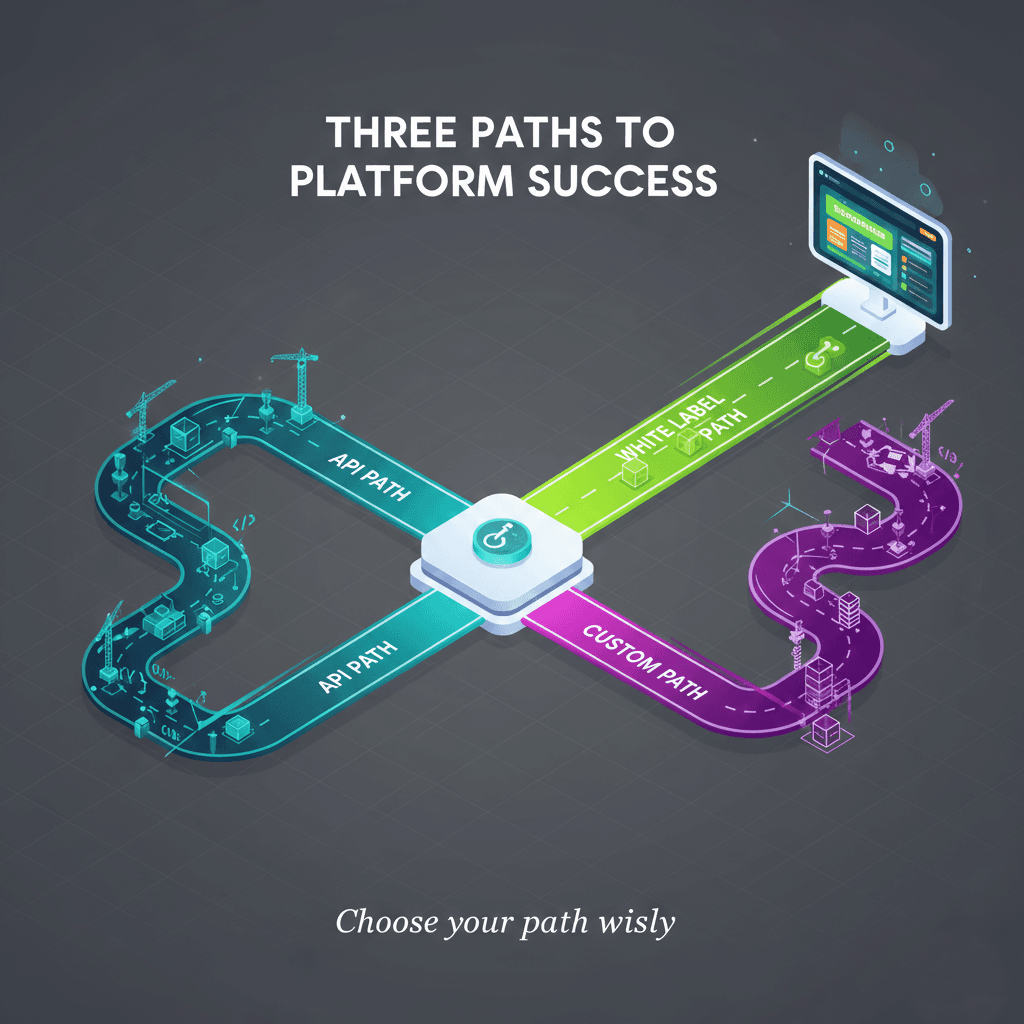
The decision of how to integrate your online betting platform shapes nearly every aspect of your operation—from launch timeline and initial investment to long-term flexibility and competitive positioning. Yet many operators approach this fundamental choice without fully understanding the implications of each path.
Three primary integration approaches dominate the market: API integration, white label solutions, and custom development. Each serves different operator profiles, and the "best" choice depends entirely on your specific circumstances, capabilities, and objectives.
At MicroBee, we've implemented all three approaches across 300+ operators in 50+ jurisdictions since 2014. This experience reveals that successful operators don't simply pick the cheapest or fastest option—they match their integration approach to their strategic reality. This guide provides the framework for making that match correctly.
Three Approaches Compared: The Executive Summary
Before diving into details, here's how the three approaches compare across key dimensions:
Factor | API Integration | White Label | Custom Development |
Time to Market | 4-8 weeks | 2-4 weeks | 6-18 months |
Upfront Investment | $150K-400K | $100K-250K | $500K-2M+ |
Technical Control | High | Low-Medium | Complete |
Ongoing Flexibility | High | Limited | Complete |
Technical Requirements | Development team needed | Minimal | Large team required |
Risk Level | Medium | Low | High |
Differentiation Potential | High | Low | Maximum |
Maintenance Burden | Shared | Provider handles | Full responsibility |
Each approach represents a distinct trade-off between control, cost, speed, and risk. Understanding these trade-offs in depth enables informed decision-making.
API Integration: Speed, Flexibility, and Lower Cost
API integration connects your custom front-end and business logic to a provider's betting engine, odds feeds, risk management, and settlement systems through programmatic interfaces. You build and own the customer-facing experience while leveraging proven back-end infrastructure.
How API Integration Works
In the API model, providers expose their core betting functionality through RESTful APIs or similar interfaces. Your development team:
Builds the user interface — Web applications, mobile apps, and customer touchpoints reflecting your brand and UX vision
Integrates betting APIs — Connects to provider systems for odds, bet placement, settlement, and account management
Handles business logic — Implements your specific rules for bonuses, limits, and customer management
Manages customer data — Maintains your customer database with integration points to the betting engine
The provider handles the complex betting mathematics, odds compilation, risk management algorithms, and regulatory compliance of the core betting engine.
Advantages of API Integration
Maximum front-end flexibility
API integration provides complete control over customer experience. Every pixel, interaction, and flow reflects your vision rather than template constraints. This enables genuine differentiation in increasingly competitive markets.
Operators pursuing unique positioning—whether through innovative interfaces, specialized features, or distinctive branding—find API integration essential. You're not constrained by what templates allow.
Faster iteration cycles
With front-end ownership, you control your release schedule. New features, A/B tests, and UX improvements deploy on your timeline, not your provider's. This agility proves valuable as markets evolve and customer expectations shift.
Lower long-term costs
While initial development investment exceeds white label, API integration often delivers lower total cost of ownership over three or more years. You avoid ongoing licensing premiums for features you don't use and can optimize costs through efficient front-end architecture.
Technology stack control
Your development team chooses technologies matching their expertise and your requirements. Whether React, Vue, Flutter, or native mobile development—the choice is yours. This enables hiring from broader talent pools and leveraging existing technical capabilities.
Integration flexibility
API-first architectures integrate readily with third-party tools—CRM systems, marketing automation, analytics platforms, and payment processors. You're not limited to pre-built integrations the provider supports.
Disadvantages of API Integration
Development team required
API integration assumes you have or will build technical capabilities. Without experienced developers familiar with betting systems, integration complexity creates risk. This approach doesn't suit operators without technical resources.
Front-end maintenance responsibility
You own ongoing maintenance, security updates, performance optimization, and bug fixes for customer-facing systems. This operational burden continues indefinitely.
Longer initial timeline than white label
Building custom front-ends takes time. While faster than full custom development, API integration typically requires 4-8 weeks minimum compared to 2-4 weeks for white label.
Integration complexity
Betting APIs involve complexity—real-time odds updates, bet validation, settlement logic, and edge cases. Inexperienced teams underestimate this complexity, leading to bugs affecting customer experience and financial accuracy.
Ideal API Integration Candidates
API integration fits operators who:
Have existing technical teams or resources to build them
Prioritize differentiation through unique customer experiences
Plan long-term operation where total cost of ownership matters
Need flexibility to integrate specialized third-party tools
Want control over their technology roadmap
White Label: Fastest Launch, Less Control
White label solutions provide complete, ready-to-deploy betting platforms that operators brand as their own. The provider handles everything technical—you focus on branding, marketing, and operations.
How White Label Works
White label providers deliver:
Complete platform — Fully functional betting website and/or mobile applications
Branding customization — Your logo, colors, and basic design elements applied to templates
Operational tools — Back-office systems for player management, reporting, and configuration
Technical infrastructure — Hosting, security, updates, and maintenance
Regulatory compliance — Platform-level compliance features for target jurisdictions
You receive a turnkey operation. Configure your branding, set your operational parameters, connect payment processing, and launch. The provider handles technical operations ongoing.
Advantages of White Label
Fastest time to market
White label delivers operational platforms in 2-4 weeks—sometimes faster. When market windows are closing or competitive timing matters, this speed advantage proves decisive.
MicroBee's white label solution achieves 2-4 week deployments consistently, enabling operators to capture market opportunities before competitors.
Lowest initial investment
Without custom development costs, white label requires the smallest upfront capital. Operators with limited budgets can launch competitive platforms without major technical investment.
No technical team required
White label eliminates need for development staff. Operators without technical capabilities—media companies, retail businesses, or entrepreneurs—can enter the market without building engineering teams.
Reduced operational risk
Proven platforms with established track records carry less implementation risk than custom development. Bugs have been identified and fixed across many deployments. Security vulnerabilities have been addressed.
Provider handles maintenance
Updates, security patches, performance optimization, and infrastructure management remain the provider's responsibility. Your team focuses on business operations rather than technical maintenance.
Regulatory compliance included
Quality white label providers build compliance features—responsible gambling tools, KYC integration, regulatory reporting—into the platform. You benefit from compliance work already completed.
Disadvantages of White Label
Limited differentiation
Template-based platforms constrain uniqueness. While branding customization is possible, core user experience resembles other operators on the same platform. Standing out becomes challenging when competitors use similar or identical templates.
Feature dependency
You receive the features the provider builds. If you need capabilities outside their roadmap, options are limited. Feature requests enter provider queues competing with other clients' needs.
Less flexibility for integrations
Pre-built platforms may not support every third-party tool you want to use. Integration options depend on what the provider has built and supports.
Revenue share economics
Many white label agreements include revenue share components that become significant at scale. What seems economical at launch may prove expensive as revenue grows.
Platform lock-in
Deep dependency on a single provider creates switching costs. Migration to alternative platforms requires rebuilding customer relationships, reintegrating systems, and potential operational disruption.
Limited competitive moat
When multiple competitors use identical or similar platforms, competition shifts entirely to marketing and pricing—eroding margins and making differentiation difficult.
Ideal White Label Candidates
White label fits operators who:
Prioritize speed to market above differentiation
Lack technical teams and prefer not to build them
Have limited initial capital for development investment
Are testing market viability before larger commitment
Operate in less competitive markets where differentiation matters less
Come from non-technical backgrounds (media, retail, hospitality)
Custom Development: Maximum Control, Highest Cost and Risk
Custom development builds your betting platform from the ground up—every component designed specifically for your requirements. You own the entire technology stack.
How Custom Development Works
Full custom development means building:
Betting engine — Core mathematics, odds calculation, bet validation, and settlement
Risk management — Liability monitoring, automated limits, and exposure management
User interfaces — Web platforms, mobile applications, and customer touchpoints
Back-office systems — Administrative tools, reporting, and operational management
Data infrastructure — Databases, analytics, and business intelligence
Integration layer — Connections to payment processors, data feeds, and third parties
Compliance systems — Regulatory tools, responsible gambling, and reporting
Everything is yours—designed, built, and maintained by your organization.
Advantages of Custom Development
Complete control
Every decision is yours. Technology choices, feature priorities, architecture patterns, and release schedules reflect your strategy without compromise. No dependency on provider roadmaps or limitations.
Maximum differentiation
Unique capabilities become possible. Proprietary features, innovative bet types, and distinctive experiences create competitive advantages that templated competitors cannot replicate.
No ongoing licensing costs
Without provider fees, revenue share, or licensing costs, custom platforms can achieve lower operating costs at scale—assuming development and maintenance costs are managed effectively.
Full data ownership
Customer data, betting patterns, and operational insights remain entirely within your control. No concerns about provider data usage or restrictions on analytical capabilities.
Acquisition value
Proprietary technology platforms command premium valuations in acquisitions. Custom technology represents intellectual property that acquirers value independently of customer base.
Disadvantages of Custom Development
Highest initial investment
Custom development costs range from $500,000 to over $2 million for comprehensive platforms—and frequently exceed initial estimates. Budget overruns are common as complexity reveals itself.
Longest time to market
Building from scratch takes 6-18 months minimum for functional platforms. More sophisticated implementations extend to 2-3 years. Markets evolve during development, and competitors don't wait.
Maximum technical risk
Betting systems involve complex mathematics, edge cases, and failure modes that experienced teams understand. Inexperienced development creates risk of costly errors—incorrect settlements, exploitable bugs, and security vulnerabilities.
Ongoing maintenance burden
Every component requires maintenance, security updates, performance optimization, and bug fixes. Development team costs continue indefinitely, often exceeding initial development investment within 2-3 years.
Regulatory complexity
Building compliance features from scratch requires deep regulatory expertise. Mistakes create licensing risk and potential enforcement action. The cost of regulatory expertise adds to development budgets.
Talent competition
Experienced betting platform developers are scarce and expensive. Recruiting and retaining qualified teams proves challenging for operators competing with established gaming technology companies.
Ideal Custom Development Candidates
Custom development fits operators who:
Have substantial capital (typically $2M+ available)
Operate at scale where elimination of licensing fees justifies investment
Possess or can build experienced technical teams
Require truly proprietary capabilities for competitive advantage
Plan long-term independent operation (10+ years)
Already operate successfully and seek technology ownership
Integration Complexity Comparison
Technical complexity varies dramatically across approaches. Understanding this complexity helps assess resource requirements.
API Integration Complexity
Front-end development: Moderate to high complexity depending on sophistication. Basic functional platforms require 2-3 developers for 2-3 months. Sophisticated applications need larger teams and longer timelines.
API integration: Moderate complexity for experienced developers. Betting APIs involve real-time data handling, state management, and error handling that require expertise. Plan for 4-6 weeks of dedicated integration work.
Testing requirements: Significant testing needed to ensure betting flows work correctly. Edge cases—partial settlements, void events, odds changes—require thorough coverage.
Ongoing maintenance: Moderate. Front-end updates, API version changes, and bug fixes require ongoing development capacity.
White Label Complexity
Configuration: Low complexity. Branding configuration, operational settings, and basic customization typically require days rather than weeks.
Training: Moderate learning curve for back-office tools. Staff need training on player management, reporting, and operational procedures.
Integration: Limited to supported options. Payment processor integration and basic third-party connections follow documented procedures.
Ongoing maintenance: Minimal technical maintenance. Operational focus on marketing, customer service, and business management.
Custom Development Complexity
Architecture: High complexity requiring experienced system architects. Decisions made early have long-term consequences.
Core betting engine: Very high complexity. Betting mathematics, real-time odds management, and settlement logic require specialized expertise.
Risk management: High complexity. Automated systems preventing liability exposure require sophisticated algorithms and extensive testing.
Compliance systems: High complexity. Regulatory requirements across jurisdictions demand comprehensive feature sets.
Integration: Full responsibility for all third-party integrations—payment processors, data feeds, verification services, and analytics tools.
Ongoing maintenance: Maximum burden. Every component requires support, updates, and optimization indefinitely.
Time to Market Analysis
Launch timing significantly impacts competitive positioning and cash flow. Here's how timelines typically unfold:
API Integration Timeline
Phase | Duration | Activities |
Planning & Design | 2-3 weeks | Requirements, architecture, UI/UX design |
Core Development | 4-6 weeks | Front-end build, API integration |
Testing | 2-3 weeks | QA, UAT, performance testing |
Soft Launch | 1-2 weeks | Limited release, bug fixes |
Total | 9-14 weeks |
Accelerated timelines (6-8 weeks) are possible with experienced teams and simplified requirements. Complex implementations extend to 16-20 weeks.
White Label Timeline
Phase | Duration | Activities |
Contract & Setup | 1 week | Agreement, account configuration |
Branding | 1-2 weeks | Logo, colors, content integration |
Configuration | 1 week | Operational settings, payment integration |
Testing | 3-5 days | Functional verification, UAT |
Total | 2-4 weeks |
MicroBee consistently achieves the lower end of this range, with many implementations completing in 2-3 weeks.
Custom Development Timeline
Phase | Duration | Activities |
Planning & Architecture | 2-3 months | Requirements, design, technical planning |
Core Engine Development | 4-6 months | Betting engine, risk management |
UI/UX Development | 3-4 months | Front-end applications (parallel) |
Integration | 2-3 months | Payments, data feeds, third parties |
Testing | 2-3 months | Comprehensive QA, security, performance |
Soft Launch | 1-2 months | Beta release, refinement |
Total | 12-18 months |
Many custom projects extend beyond 18 months. Scope creep, technical challenges, and resource constraints commonly cause delays.
Total Cost Over 3 Years
Understanding total cost of ownership (TCO) over meaningful timeframes reveals the true economics of each approach.
API Integration: 3-Year TCO
Year 1:
Initial development: $200,000-350,000
API licensing fees: $50,000-100,000
Infrastructure: $30,000-60,000
Maintenance team: $100,000-180,000
Year 1 Total: $380,000-690,000
Year 2:
API licensing: $50,000-100,000
Infrastructure: $40,000-80,000
Maintenance/enhancement: $120,000-200,000
Year 2 Total: $210,000-380,000
Year 3:
API licensing: $50,000-100,000
Infrastructure: $50,000-100,000
Maintenance/enhancement: $120,000-200,000
Year 3 Total: $220,000-400,000
3-Year API Integration TCO: $810,000-1,470,000
White Label: 3-Year TCO
Year 1:
Setup and licensing: $100,000-200,000
Monthly fees: $60,000-120,000
Revenue share (at $1M GGR): $50,000-150,000
Year 1 Total: $210,000-470,000
Year 2:
Monthly fees: $60,000-120,000
Revenue share (at $2M GGR): $100,000-300,000
Year 2 Total: $160,000-420,000
Year 3:
Monthly fees: $60,000-120,000
Revenue share (at $3M GGR): $150,000-450,000
Year 3 Total: $210,000-570,000
3-Year White Label TCO: $580,000-1,460,000
Note: Revenue share economics vary dramatically. Operators achieving higher revenue pay proportionally more, potentially exceeding API integration costs.
Custom Development: 3-Year TCO
Year 1:
Initial development: $800,000-1,500,000
Infrastructure: $50,000-100,000
Development team: $300,000-500,000
Year 1 Total: $1,150,000-2,100,000
Year 2:
Development team: $350,000-550,000
Infrastructure: $75,000-150,000
Security/compliance: $50,000-100,000
Year 2 Total: $475,000-800,000
Year 3:
Development team: $400,000-600,000
Infrastructure: $100,000-175,000
Security/compliance: $75,000-125,000
Year 3 Total: $575,000-900,000
3-Year Custom Development TCO: $2,200,000-3,800,000
TCO Summary
Approach | 3-Year Low | 3-Year High | Best For |
API Integration | $810,000 | $1,470,000 | Balanced control/cost |
White Label | $580,000 | $1,460,000 | Speed, lower initial cost |
Custom Development | $2,200,000 | $3,800,000 | Maximum control/scale |
When Each Approach Makes Sense
Choose API Integration When:
You have technical capabilities. Existing development teams or ability to hire experienced developers makes API integration viable. Without this foundation, complexity becomes risk.
Differentiation matters. Markets where unique user experiences drive customer acquisition and retention justify front-end investment. Commoditized markets may not reward this investment.
Long-term planning. If you're building for 5+ years of operation, API integration's lower ongoing costs and flexibility compound into advantages.
Integration needs are complex. Requirements for specialized third-party tools, custom analytics, or unique operational integrations favor API flexibility.
You want balanced risk/reward. API integration occupies the middle ground—more control than white label, less risk than custom development.
Choose White Label When:
Speed is critical. Market windows closing, competitive timing pressure, or urgent revenue needs favor white label's rapid deployment.
Budget is constrained. Limited capital for initial investment makes white label's lower upfront costs attractive, even if long-term economics favor alternatives.
Technical resources don't exist. Organizations without development capabilities—and without desire to build them—find white label removes technical barriers entirely.
Testing market viability. Before committing substantial resources, white label enables market testing with minimal investment.
Differentiation isn't the strategy. In markets where operations, marketing, or pricing drive success more than product uniqueness, white label's limitations matter less.
Choose Custom Development When:
Scale justifies investment. Large operators processing significant volume find that eliminating licensing fees and revenue share justifies development costs.
Proprietary capabilities are essential. Genuine competitive advantages requiring unique features that providers won't build justify custom investment.
Long-term independence is the goal. Operators planning decades of independent operation value owning technology without provider dependencies.
Technical talent is available. Access to experienced betting platform developers reduces implementation risk and ongoing costs.
Capital is abundant. $2M+ available capital with tolerance for cost overruns makes custom development financially viable.
The Hybrid Approach: Best of Multiple Worlds
Increasingly, sophisticated operators combine approaches to optimize their operations.
Common Hybrid Configurations
API core + custom front-end: Use provider APIs for betting engine while building completely custom user interfaces. Balances front-end control with back-end reliability.
White label launch + API migration: Launch quickly with white label to capture market opportunity, then migrate to API integration as resources and requirements evolve. Reduces initial risk while preserving long-term flexibility.
Custom + provider components: Build proprietary front-end and operational systems while using provider APIs for specific complex functions (live betting odds, risk management). Reduces development scope while maintaining differentiation.
Multi-provider architecture: Combine best-of-breed components from multiple providers—one for sportsbook, another for casino, third for payments. Requires integration expertise but enables optimization across categories.
Hybrid Approach Benefits
Risk mitigation: Distributing across approaches reduces single-point-of-failure risk.
Staged investment: Commit resources incrementally as business validates assumptions.
Optimized capabilities: Match each component to the approach that serves it best.
Evolution flexibility: Easier to evolve architecture as needs change than to switch approaches entirely.
Hybrid Approach Challenges
Integration complexity: Multiple systems require integration and ongoing coordination.
Vendor management: Relationships with multiple providers demand management attention.
Accountability gaps: When issues span systems, determining responsibility becomes complicated.
MicroBee's Flexible Integration Options
At MicroBee, we recognize that operators have different needs, capabilities, and strategies. That's why we offer all three integration approaches—and support hybrid configurations that combine them.
Our API Integration Option
For operators with technical capabilities seeking flexibility:
Comprehensive API coverage — Full betting functionality exposed through well-documented RESTful APIs
Developer resources — SDKs, sandbox environments, and technical support accelerating integration
Flexible architecture — Build any front-end while leveraging our proven betting engine
Integration support — Our technical team assists your developers through implementation
Our White Label Solution
For operators prioritizing speed and simplicity:
Rapid deployment — 2-4 week implementations getting you to market fast
Proven templates — Battle-tested platforms refined across 300+ deployments
Comprehensive features — Full sportsbook, casino, and virtual sports capabilities
Ongoing management — We handle technical operations while you focus on business
Our Custom Development Partnership
For operators requiring tailored solutions:
Collaborative development — Our team works alongside yours building custom capabilities
Modular approach — Custom-build specific components while leveraging standard elements
Technical consultation — Guidance from teams experienced across hundreds of implementations
Flexible engagement — Scale involvement based on your internal capabilities
Hybrid Support
We actively support hybrid approaches:
Launch white label while custom front-end develops
Use our APIs for sportsbook while integrating third-party casino
Migrate from white label to API integration as you scale
Combine our platform with specialized niche providers
Contact our integration team to discuss which approach—or combination—fits your specific situation.
Making Your Decision
The right integration approach depends on your specific circumstances. Consider these decision factors:
Technical capabilities: Do you have development resources? Can you build or hire them? Without technical capabilities, white label is likely your path.
Time constraints: How urgent is market entry? Tight timelines favor white label; longer runways enable API or custom approaches.
Capital availability: What resources can you commit? Limited capital constrains options toward white label; substantial capital opens alternatives.
Differentiation strategy: How important is unique customer experience? Commoditized competition suits white label; differentiation demands API or custom.
Long-term vision: Are you building a quick market test or a decade-long operation? Short-term thinking favors white label; long-term planning may justify alternatives.
Risk tolerance: How much implementation risk can you absorb? Lower tolerance favors proven white label; higher tolerance enables custom approaches.
Taking the Next Step
Your online betting platform integration approach shapes your operational reality for years. Make this decision with appropriate analysis and expert guidance.
Evaluate Your Options
Choose Your Integration Path — Complete our integration assessment to receive personalized recommendations based on your situation.
Speak with Integration Expert — Schedule a consultation with our technical team to discuss your specific requirements and capabilities.
Explore Our Solutions — Learn more about MicroBee's API, white label, and custom development options.
See Our Platform — Explore the sportsbook capabilities available across all integration approaches.
The integration decision deserves careful consideration—but it shouldn't cause paralysis. With proper analysis and expert partnership, you can move forward confidently toward the approach that serves your business best.
MicroBee has provided B2B gaming solutions since 2014, supporting 300+ operators across 50+ jurisdictions with flexible integration options. Whether you need rapid white label deployment, API flexibility, or custom development partnership, our team can help you choose and implement the right approach.