
Microbee Tech Team
Reading Time :
10 Minute
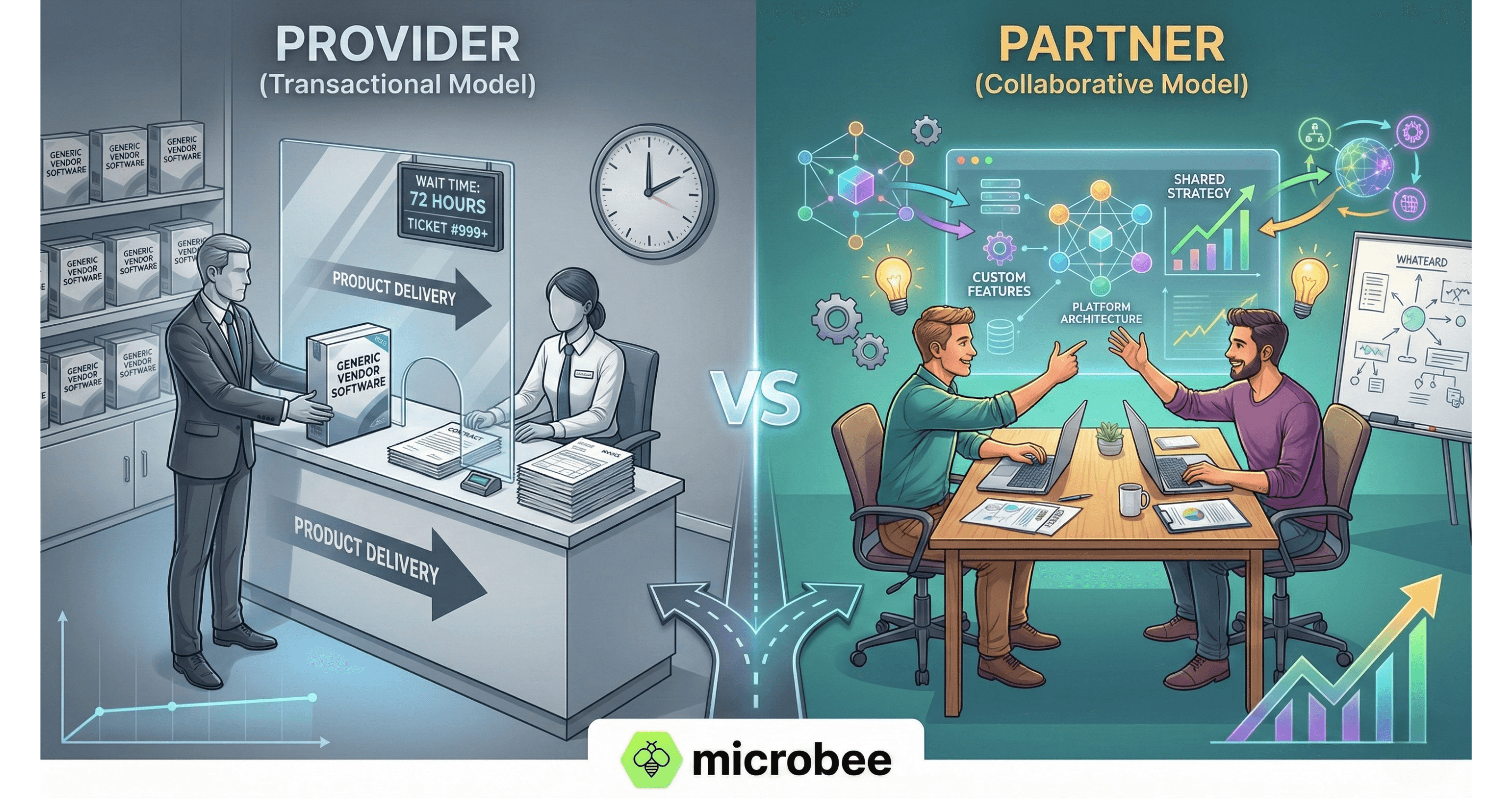
When launching or scaling an iGaming operation, choosing your technology foundation is arguably your most critical decision. The industry standard is to seek out an "iGaming platform provider"—a vendor who supplies the software stack that powers your casino, sportsbook, and backend operations. This transactional relationship is straightforward: you pay for their product, they deliver the technology, and you part ways until the next support ticket or contract renewal.
But in today's saturated, fast-evolving market, is this vendor-client dynamic enough? When every operator has access to similar game content, comparable sportsbook margins, and standard features, the true competitive advantage shifts from what your platform does to how it enables you to grow.
At MicroBee, we challenge the conventional provider model. We believe that to build a market-leading operation, you don't need just a provider. You need a strategic iGaming partner—one whose modular platform architecture enables true collaboration, not just software licensing.
The Provider Model: A Transactional Foundation
The traditional provider relationship, offered by many large established companies, is fundamentally transactional. It mirrors leasing a fully-equipped commercial kitchen. You get all the appliances (platform, games, payments), but you're following their manual, using their pre-approved ingredients, and paying a hefty monthly rent with a percentage of your revenue.
This model has clear, surface-level benefits:
Clarity: Defined scope, features, and costs.
Proven Product: The platform is stable and tested across many clients.
Speed: Implementation follows a well-trodden path.
However, the limitations become apparent when you try to build something unique:
Roadmap Dictation: Your provider's product development is aimed at the broadest market needs. Your specific, innovative ideas go into a suggestion box with thousands of others. This is why choosing between building custom or buying off-the-shelf isn't the only consideration—you also need a partner who enables strategic adaptability.
Reactive Support: Your primary interaction is through a ticketing system. You report problems; they fix them—eventually.
Alignment Gap: The provider's success metric is retaining your license fee. Your success metric is profitable, sustainable growth. These are not the same thing.
The Add-On Trap: Every meaningful customization or unique integration becomes a costly, time-consuming professional services project.
The Partner Model: A Collaborative Ascent
A strategic partner relationship is different. It's akin to co-founding a restaurant with a master chef who brings not just their kitchen, but their expertise, creativity, and vested interest in your success. The goal is mutual, long-term growth.
At MicroBee, partnership is our operating model. It's built on four pillars:
1. Co-Development & Shared Roadmaps
Your commercial goals directly influence our development priorities. We don't have a generic roadmap; we have a collaborative planning process.
How it works: Our product team holds quarterly strategy sessions with key partners. If you identify a market opportunity—say, a unique lottery-betting hybrid for your regio - we work together to scope, prioritize, and build it, often sharing the investment. This collaborative approach is only possible with comprehensive platform services that integrate seamlessly rather than operate as disconnected vendor products.
The Result: You get features that give you a first-mover advantage, not just parity with competitors.
2. Transparent Economics & Aligned Incentives
We believe our success should be intrinsically tied to yours. This goes beyond simple revenue share.
How it works: We offer flexible commercial models. More importantly, we act as a true extension of your team. Our data analysts might spot an underperforming game segment in your operation and proactively suggest a campaign to boost it. This proactive optimization mindset also drives our approach to game aggregator integration - prioritizing operational excellence over superficial game counts.
The Result: A relationship built on shared growth, not just monthly invoices.
3. Proactive, Embedded Support
We move beyond a ticketing system to embedded collaboration.
How it works: You get direct access to dedicated solution architects and technical account managers who understand your business inside out. This same embedded collaboration approach is reflected in our developer-first API design, where technical excellence meets genuine partnership. We conduct regular health checks and optimization workshops.
The Result: Your operations run smoother and smarter, with fewer crises and more strategic forward motion.
4. Ecosystem Advocacy
A partner opens their network for you. A provider merely supplies a product.
How it works: Need a specialized payment gateway for Latin America? Or an introduction to a top-tier content studio for an exclusive deal? Leverage our curated network of trusted integrations and commercial introductions. We vet partners so you can integrate with confidence.
The Result: You accelerate growth by plugging into a vetted ecosystem, reducing your due diligence and integration time.
MicroBee Partnership in Action: A Case Study
Consider "NordicWin," a mid-sized operator in Scandinavia (name changed for confidentiality). They approached us after feeling stifled by a major provider.
The Challenge: They had strong local brand loyalty but couldn't create the hyper-localized sports promotions their community wanted. Their provider's "global bonus engine" was too rigid.
The Partnership Solution: Within 90 days, our joint task force co-built a "Community Challenge" module. It allowed NordicWin to create promotions tied to local hockey team performance, with custom leaderboards and prizes. This rapid co-development is enabled by our 6-10 week integration timeline and modular architecture—not possible with rigid legacy providers.
The Outcome: Player engagement time increased by 40% during the local hockey season. NordicWin didn't just get a new feature; they got a unique selling proposition co-created with their technology partner.
How to Discern a Vendor from a Partner: Your Due Diligence Checklist
During your platform selection process, ask these revealing questions:
Roadmap Influence: "Can you show me an example of a feature added to your platform based directly on a client's request?"
Commercial Flexibility: "Beyond standard models, how do you structure agreements to align with ambitious growth targets or unique market conditions?"
Support Relationship: "Who will be my day-to-day contact, and what is their mandate? Are they measured on ticket closure speed or my commercial success?"
Customization Process: "Walk me through the process if I need a significant, unique feature that isn't on your standard roadmap. What would the collaboration look like?"
Long-Term Vision: "How do you define a successful relationship with a client three years from now?"
Conclusion: The Infrastructure of Ambition
Choosing an iGaming platform provider is a decision about your technology stack. Choosing an iGaming partner is a decision about your growth trajectory.
A provider sells you a set of tools. A partner equips you with the tools, the blueprint, and the skilled co-builder to help you construct something remarkable—and then helps you renovate it as the market changes.
Your ambition deserves more than a vendor. It deserves a partner invested in the same destination.
Are you ready to move beyond a transactional relationship? Let's discuss how the MicroBee partnership model can become the foundation for your unique growth story. Contact us to start a strategic conversation.