
Microbee Support Team
Reading Time :
10 Minute
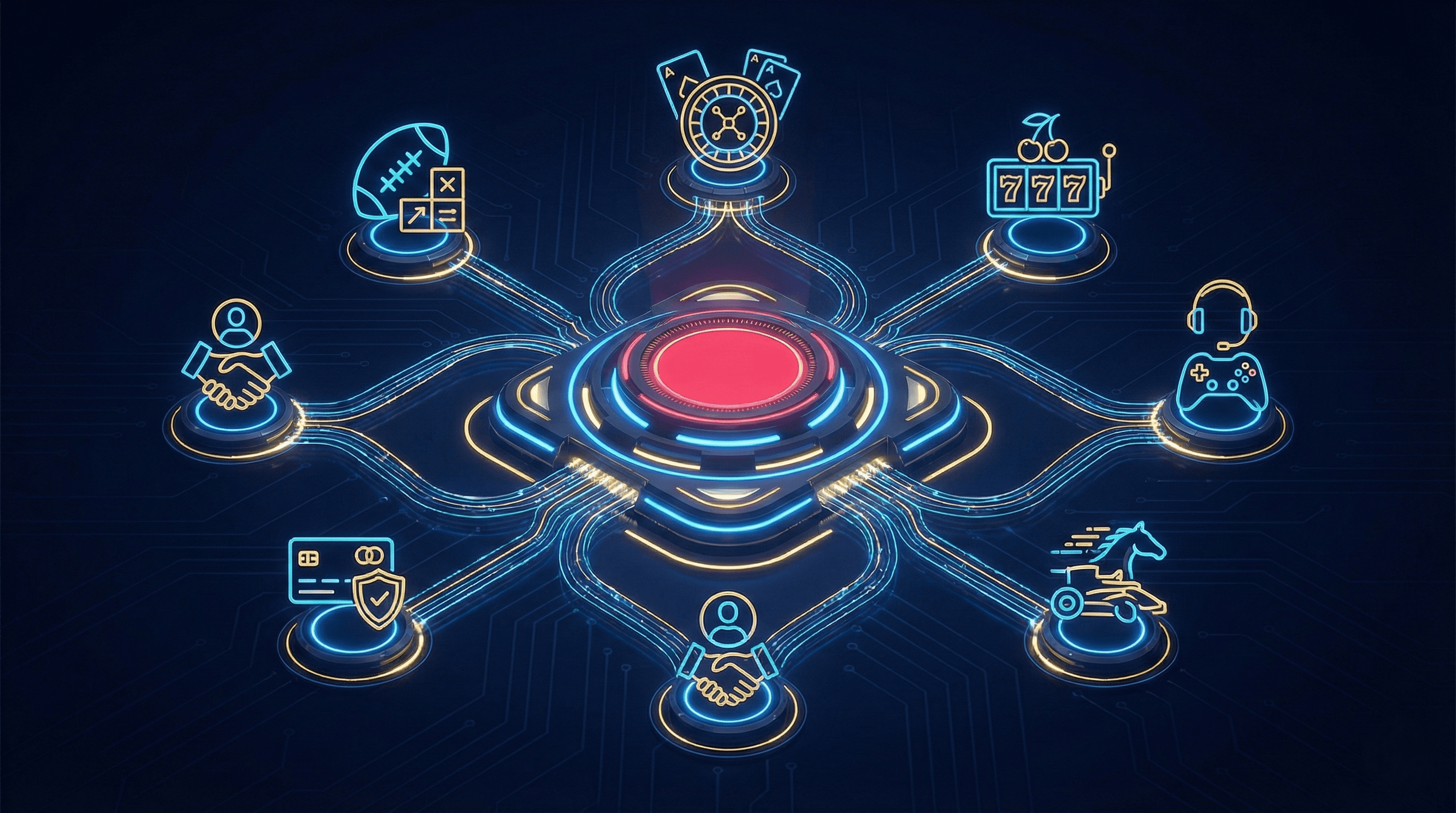
The multi-vendor approach to sportsbook technology has long been the default path for operators building their platform stack. Need a sportsbook? One vendor. Need casino games? Another. Need a payment provider? A third. Need a CRM? A fourth. The result is a fragile, expensive ecosystem of integrated systems that creates dependency on multiple providers, multiple contracts, and multiple support relationships — all of which must function perfectly simultaneously for the player experience to be seamless.
The complete sportsbook solution model challenges this orthodoxy. A single platform provider delivering sportsbook, casino, live casino, virtual sports, payments, CRM, and risk management from one codebase, one commercial relationship, and one support team is not just operationally simpler — it is strategically superior. This guide explains why, and how to evaluate whether the all-in-one approach is right for your operation.
Everything an Operator Needs to Run a Sportsbook
Let us start with first principles. What does a complete sportsbook operation actually require?
Platform Module | Function | Mission-Critical? |
Sports betting engine | Pre-match and in-play bet acceptance, odds management | ✓ Yes |
Trading and risk tools | Liability monitoring, odds adjustment, bettor profiling | ✓ Yes |
Casino game content | Slots, table games, live casino, virtual sports | ✓ For casino |
Payments engine | Deposits, withdrawals, currency management | ✓ Yes |
Bonus and promotions | Welcome offers, free bets, cashback, loyalty | ✓ Yes |
Player CRM | Segmentation, communication, lifecycle management | ✓ Yes |
Fraud and compliance | KYC/AML, responsible gambling, fraud detection | ✓ Yes |
Reporting and analytics | Financial, player, product, and compliance reporting | ✓ Yes |
Affiliate management | Partner tracking, commission calculation, payouts | ✓ For B2C |
Customer support tools | Live chat, ticketing, player communication | ✓ Yes |
A multi-vendor stack requires sourcing each of these modules separately, negotiating separate contracts, managing separate technical integrations, and maintaining separate support relationships. The complexity and cost grow exponentially with each additional vendor.
Platform Modules: The Complete Picture
Sports Betting Engine
The core of any sportsbook, MicroBee's sportsbook platform covers 30+ sports with comprehensive pre-match and in-play markets. Real-time odds feeds, automated trading tools, and a trader-friendly back-office interface are built in. Live betting with sub-second odds updates is supported out of the box.
Casino Game Content
Rather than requiring a separate casino game aggregator contract, MicroBee includes 5,000+ slot titles from 100+ providers. HD live casino with professional dealers, AI-powered virtual sports, and e-sports betting markets are all included in the same integration.
Payment Processing
Payment processing integrated directly at the platform level eliminates the friction of connecting an external payment provider to your game wallet. MicroBee's integrated payment engine supports 100+ payment methods across all major markets, with automated deposit processing and configurable withdrawal approval rules.
Bonus Engine and Promotions
A platform-native bonus engine is dramatically more efficient than a third-party bonus tool. Because it has direct access to the player wallet, game engine, and transaction history, it can apply bonus conditions accurately and in real time, without the reconciliation lag and errors that characterise third-party integrations.
Integration vs All-in-One: The True Trade-off
The principal argument for multi-vendor integration is specialisation — each vendor is best-in-class in their specific area. In practice, this argument breaks down under scrutiny:
• The best sportsbook trading engine is worth nothing if it generates data that your separate CRM cannot read without a custom integration.
• The best casino game library creates fragmented player experience when it runs on a different session management system than your sportsbook.
• The best payment provider creates operational complexity when your fraud system does not have real-time access to transaction data.
Integration friction is real, costly, and ongoing. Every API change by any vendor requires testing across the entire integrated stack. Every version upgrade by one provider can break another. The total cost of multi-vendor integration maintenance is rarely calculated honestly by operators who choose this path.
Single Vendor Benefits
Advantages of the All-in-One Platform Model |
✓ Single commercial relationship: One contract, one renewal, one pricing negotiation |
✓ Unified technical integration: One API, one authentication system, one data model |
✓ Single support escalation: One team accountable for the entire platform |
✓ Faster problem resolution: No vendor finger-pointing when cross-module issues occur |
✓ Unified data model: Player data, transaction data, and game data all in the same system |
✓ Lower integration cost: No custom bridging between separate platform components |
✓ Consistent compliance: One compliance team ensuring all modules meet regulatory standards |
✓ Faster feature delivery: New features do not require multi-vendor coordination |
Unified Player Experience
From the player's perspective, the difference between a unified platform and a multi-vendor stack is felt at every touchpoint:
Wallet and Balance
On a unified platform, a player's wallet is shared across sportsbook and casino. They deposit once and play anything. On a multi-vendor stack, players often have separate casino and sportsbook wallets requiring separate deposits — a friction point that drives abandonment.
Bonuses and Promotions
Cross-vertical bonuses (e.g., "bet on football, get casino free spins") are native on a unified platform. Implementing the same promotion across a multi-vendor stack requires complex custom integration — and often fails to work seamlessly.
Navigation and UX
When all products live on the same platform, the transition from sports betting to live casino to slots is seamless — same header, same account menu, same support chat. On a multi-vendor stack, players often land on visually inconsistent pages with separate login flows.
Centralised Reporting and Analytics
Unified reporting is one of the most underestimated advantages of the all-in-one model:
• Player 360-degree view: Complete player activity across all verticals in a single dashboard.
• Cross-vertical LTV calculation: A player's total value across sportsbook, casino, and live casino combined — impossible to calculate accurately across separate vendor systems.
• Unified financial reconciliation: One report covering all revenue, costs, and margins — no manual consolidation of separate vendor financial reports.
• Compliance reporting: One system generating all regulatory reports, avoiding the risk of inconsistencies across multiple vendor data exports.
Cost Comparison: All-in-One vs Multi-Vendor
Cost Component | All-in-One (MicroBee) | Multi-Vendor Stack |
Platform licensing | Single monthly fee | 4–6 separate vendor fees |
Integration (Year 1) | 2–4 weeks, included | 6–18 months, $100k–500k |
Ongoing integration maintenance | Minimal | 0.5–2 FTE engineers ongoing |
Support contracts | 1 contract | 4–6 support contracts |
Compliance management | Centralised | Per-vendor compliance overhead |
Cross-vendor reconciliation | None needed | Significant monthly admin |
Feature delivery time | Fast (single codebase) | Slow (multi-vendor coordination) |
Total Year 1 cost estimate | Significantly lower | 3–5x higher |
MicroBee's Complete Solution
MicroBee delivers the complete sportsbook solution from a single Malta Gaming Authority-licensed platform (MGA/B2B/203/2016), regulated by the UK Gambling Commission (Account 79852). Our all-in-one approach covers every module an operator needs, with 11 years of experience deploying complete platforms to 300+ operators across 50+ jurisdictions.
The integration timeline is 2–4 weeks — not months. Dedicated account managers are assigned from Day 1. The platform scales from startup operators to 100,000+ daily active users without infrastructure changes on the operator's side.
Explore the full MicroBee platform overview, including the sportsbook, casino and slots, live casino, and virtual sports products.
Frequently Asked Questions
What is an all-in-one sportsbook solution?
An all-in-one sportsbook solution is a single platform that provides all the technology an operator needs to run a complete gambling business — sportsbook, casino, payments, CRM, and compliance — from one vendor, through one technical integration.
Is a multi-vendor or all-in-one approach better for sportsbooks?
For the majority of operators, all-in-one delivers better value: faster launch, lower integration cost, simpler operations, and a unified player experience. Multi-vendor stacks are only justified for tier-1 operators with specific best-in-class requirements and large technical teams.
How long does it take to launch on MicroBee's complete platform?
MicroBee's complete platform — sportsbook, casino, live casino, virtual sports, and e-sports — can be live in 2–4 weeks. This includes game content loading, payment provider connection, back-office configuration, and QA testing.
See MicroBee's complete sportsbook platform in action. |