
Microbee Support Team
Reading Time :
12 Minute
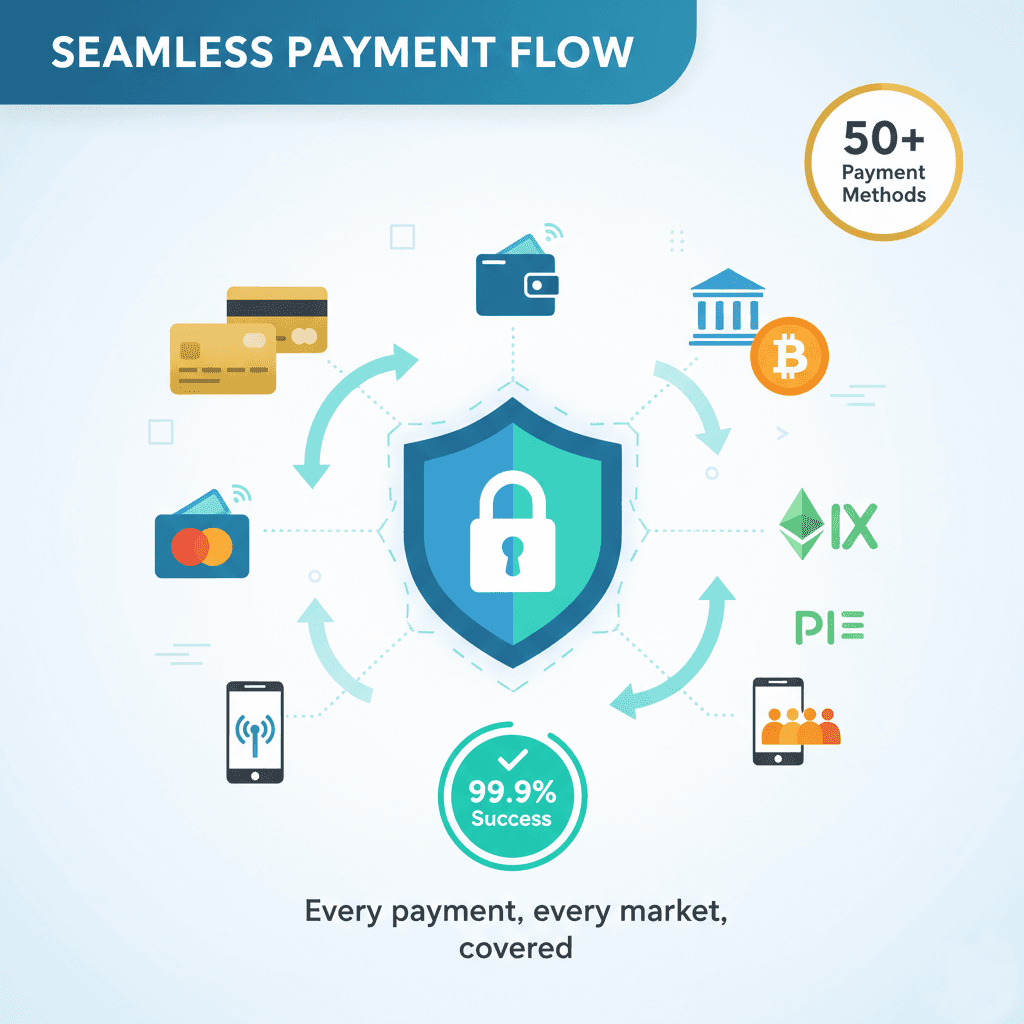
The most sophisticated sportsbook platform becomes worthless if players can't deposit money. Payment processing isn't a technical checkbox—it's the critical juncture where interested visitors become paying customers. Every friction point, failed transaction, and missing payment method directly costs you revenue.
Industry data reveals the stakes: payment-related issues account for approximately 30% of registration abandonment in sports betting. Players who encounter their preferred payment method convert at 2-3x the rate of those forced to use alternatives. And failed deposit attempts have only a 40% retry rate—most players simply leave.
At MicroBee, we've integrated payment solutions across 300+ operators in 50+ jurisdictions, processing millions of transactions monthly. This experience reveals that payment optimization is never "done"—it requires continuous attention to regional preferences, fraud patterns, and emerging payment technologies. This guide shares the framework for building and optimizing payment infrastructure that converts.
Why Payment Gateway Integration Matters
Understanding payment's impact on business outcomes justifies the investment in getting it right.
The 30% Conversion Impact
Payment directly affects conversion at multiple stages:
Registration abandonment: When players don't see familiar payment methods during registration, 25-35% abandon before completing signup. This happens before you even have a chance to demonstrate your platform's value.
First deposit failure: Players who attempt first deposits but encounter errors retry only 40% of the time. The remaining 60% represent permanent losses—they rarely return to try again.
Payment method preference: Conversion rates vary 2-3x between preferred and alternative payment methods. A player who prefers PIX but only finds credit cards available may complete the deposit, but with significantly higher friction.
Deposit amount impact: Limited payment methods often constrain deposit amounts. Players wanting to deposit $500 through a method with $200 limits either deposit less or abandon entirely.
The Lifetime Value Connection
Payment experience affects more than initial conversion:
Retention correlation: Players whose first deposit succeeds smoothly show 23% higher 30-day retention than those experiencing payment friction.
Deposit frequency: Frictionless payment experiences encourage repeat deposits. Every additional step or delay in the deposit process reduces deposit frequency.
Withdrawal experience matters equally: Players who experience slow or problematic withdrawals deposit 40% less in subsequent sessions. The psychological impact of withdrawal friction extends well beyond the individual transaction.
Competitive Differentiation
In markets with multiple operators offering similar betting products, payment experience becomes a differentiator:
Local payment coverage signals market commitment and understanding.
Fast withdrawals build trust and loyalty more effectively than bonus offers.
Payment method variety ensures you don't lose customers to competitors with better coverage.
Regional Payment Method Requirements
Payment preferences vary dramatically across regions. Successful global operators match payment coverage to regional expectations.
Europe
Dominant methods:
Credit/debit cards (Visa, Mastercard) — Still significant but declining
Bank transfers (SEPA for EUR)
E-wallets (PayPal, Skrill, Neteller)
Local bank methods
Regional specifics by country:
Country | Essential Methods | Notes |
UK | Visa/MC, PayPal, Apple Pay, Bank Transfer | Open Banking growing rapidly |
Germany | Giropay, Klarna, PayPal, Cards | Instant bank transfers preferred |
Netherlands | iDEAL (dominant), Cards, PayPal | iDEAL handles 60%+ of online payments |
Sweden | Swish, Trustly, Cards | Mobile payments dominant |
Poland | Blik, Przelewy24, Cards | Local methods essential |
Spain | Bizum, Cards, PayPal | Bizum adoption accelerating |
Italy | PostePay, PayPal, Cards | PostePay widely used |
Key insight: Pan-European strategy requires 15-20 payment methods to cover major markets effectively. Single payment provider rarely offers complete coverage.
Latin America
Dominant methods:
Local bank transfers
Cash voucher systems
Digital wallets
PIX (Brazil — transformational)
Regional specifics:
Country | Essential Methods | Notes |
Brazil | PIX (dominant), Boleto, Cards | PIX handles 70%+ of digital payments |
Mexico | SPEI, OXXO vouchers, Cards | Cash payments still significant |
Argentina | Bank transfers, Mercado Pago | Currency controls complicate processing |
Colombia | PSE, Efecty, Baloto, Cards | Cash vouchers important |
Peru | PagoEfectivo, Bank transfers | Growing digital payment adoption |
Chile | Webpay, Bank transfers, Cards | Relatively card-friendly |
Key insight: Cash-based payment options remain essential in most Latin American markets. PIX has transformed Brazil—operators without PIX integration cannot compete there.
Africa
Dominant methods:
Mobile money (dominant in many markets)
Bank transfers (developed markets)
Cards (limited penetration)
Cash agents
Regional specifics:
Country | Essential Methods | Notes |
Nigeria | Bank transfers, Cards, Mobile money | Paystack, Flutterwave popular |
Kenya | M-Pesa (dominant), Bank transfers | Mobile money essential |
South Africa | EFT, Cards, SnapScan | Most developed payment ecosystem |
Ghana | MTN Mobile Money, Bank transfers | Mobile money growing |
Tanzania | M-Pesa, Tigo Pesa | Mobile money dominant |
Uganda | MTN Mobile Money, Airtel Money | Mobile-first market |
Key insight: Mobile money isn't optional in East and West Africa—it's the primary payment infrastructure. Operators attempting card-focused strategies in these markets fail.
Asia-Pacific
Dominant methods:
E-wallets and super-apps
QR code payments
Bank transfers
Cards (varies by market)
Regional specifics:
Country | Essential Methods | Notes |
India | UPI (dominant), Paytm, Cards | UPI processed 10B+ transactions/month |
Philippines | GCash, Maya, Bank transfers | E-wallet adoption very high |
Thailand | PromptPay, TrueMoney, Bank transfers | QR payments ubiquitous |
Indonesia | GoPay, OVO, Bank transfers | E-wallet competition intense |
Vietnam | MoMo, ZaloPay, Bank transfers | Digital wallet growth rapid |
Japan | Convenience store payments, Cards, PayPay | Unique payment culture |
Key insight: Super-app e-wallets dominate Southeast Asia. Integration with GCash, GoPay, and similar platforms is essential for regional success.
Top Payment Providers by Region
Selecting payment providers requires balancing coverage, costs, reliability, and gambling-industry acceptance.
Global Payment Providers
Stripe
Coverage: 40+ countries
Gambling support: Limited (restricted category)
Strengths: Developer experience, documentation
Limitations: Doesn't support gambling in most jurisdictions
PayPal
Coverage: 200+ markets
Gambling support: Licensed operators in select jurisdictions
Strengths: Consumer trust, broad adoption
Limitations: Strict compliance requirements, not available everywhere for gambling
Worldpay (FIS)
Coverage: Global
Gambling support: Yes, with licensing requirements
Strengths: Enterprise-grade, high-risk experience
Limitations: Complex integration, enterprise pricing
Gambling-Specialized Providers
Nuvei
Coverage: Global with strong European presence
Gambling support: Specializes in gaming
Strengths: APM coverage, gaming expertise, regulatory compliance
Best for: Operators seeking comprehensive single-provider solution
Paysafe (Skrill, Neteller, paysafecard)
Coverage: Global
Gambling support: Core business
Strengths: Brand recognition with bettors, prepaid options
Best for: Markets where Skrill/Neteller have strong adoption
PaymentIQ (by Devcode)
Coverage: Global (aggregator)
Gambling support: Built for gaming
Strengths: 300+ payment method aggregation, routing optimization
Best for: Operators wanting single integration for multiple providers
Trustly
Coverage: Europe primarily
Gambling support: Yes
Strengths: Open Banking, instant bank payments
Best for: European operators prioritizing bank transfer methods
Regional Specialists
Latin America: EBANX, dLocal, PayRetailers Africa: Flutterwave, Paystack, Cellulant Asia: 2C2P, Razorpay, Xendit Europe: Adyen (with gambling support), Checkout.com
Provider Selection Criteria
Coverage match: Does the provider support payment methods your target markets actually use?
Gambling acceptance: Is your business model explicitly supported, or are you in a "restricted" category?
Regulatory compliance: Does the provider maintain licenses and compliance frameworks for your jurisdictions?
Integration complexity: What development resources does integration require?
Pricing structure: How do setup fees, transaction fees, and currency conversion costs compare?
Reliability: What are documented uptime statistics and incident response procedures?
Integration Complexity Comparison
Payment integration complexity varies significantly across provider types and integration approaches.
Direct API Integration
Complexity level: High
Development effort: 4-12 weeks per provider
What's involved:
API integration for each payment method
Webhook handling for transaction status updates
Error handling for every failure scenario
Security implementation (PCI compliance considerations)
Testing across payment methods and currencies
Advantages:
Maximum control over payment experience
Potential cost savings (no aggregator fees)
Custom error handling and recovery flows
Disadvantages:
Highest development investment
Ongoing maintenance for each integration
Each new payment method requires new integration
Payment Aggregator Integration
Complexity level: Medium
Development effort: 2-6 weeks
What's involved:
Single API integration to aggregator
Configuration of payment methods through dashboard
Webhook handling (standardized format)
Basic customization of payment flows
Advantages:
Single integration enables many payment methods
Aggregator handles provider-level complexity
Adding payment methods often requires no code changes
Built-in routing and failover
Disadvantages:
Aggregator fees on top of provider fees
Less control over payment experience
Dependency on aggregator reliability
Pre-Integrated Platform Solutions
Complexity level: Low
Development effort: Days to 2 weeks
What's involved:
Configuration through platform dashboard
Provider account setup
Testing and go-live verification
Advantages:
Minimal technical effort
Proven, tested integrations
Platform handles updates and maintenance
Operational support available
Disadvantages:
Limited to platform's supported providers
Less customization flexibility
Platform dependency
Integration Complexity Summary
Approach | Dev Time | Maintenance | Flexibility | Cost |
Direct API | 4-12 weeks | High | Maximum | Lower per-transaction |
Aggregator | 2-6 weeks | Medium | High | Medium |
Pre-integrated | Days-2 weeks | Low | Moderate | Varies |
Payment Success Rate Optimization
Payment success rate—the percentage of attempted transactions that complete successfully—directly impacts revenue. Improving success rate from 85% to 92% increases effective conversion by 8%.
Understanding Failure Types
Soft declines (recoverable):
Insufficient funds
Temporary issuer issues
Velocity limits exceeded
Technical timeouts
Hard declines (non-recoverable):
Invalid card numbers
Expired cards
Fraud blocks
Card reported lost/stolen
Technical failures:
Integration errors
Timeout issues
Currency/amount mismatches
Network problems
Optimization Strategies
Smart retry logic
Implement intelligent retry for soft declines:
Retry after delays (30 seconds, 5 minutes, 1 hour)
Limit retry attempts to avoid fraud flags
Different retry strategies for different decline codes
Well-implemented retry logic recovers 15-25% of initially failed transactions.
Cascade routing
When primary processor declines, automatically attempt secondary processor:
Maintain multiple processor relationships
Route based on decline reason codes
Balance across processors to maintain health with each
Cascade routing can improve success rates by 5-10%.
Dynamic payment method offering
Present payment methods based on success likelihood:
Prioritize methods with higher success rates for user's profile
Consider time of day, amount, and user history
A/B test payment method ordering
Card updater services
Automatically update expired or replaced card details:
Visa Account Updater, Mastercard Automatic Billing Updater
Maintains payment continuity for returning customers
Particularly valuable for subscription or recurring deposit users
3D Secure optimization
Balance security and conversion:
Use 3DS2 for improved experience over 3DS1
Apply risk-based authentication (challenge only high-risk transactions)
Provide clear instructions during authentication
Optimized 3DS implementations reduce authentication abandonment by 20-30%.
Local acquiring
Process transactions through acquirers in the customer's country:
Lower decline rates from issuer geographic concerns
Reduced cross-border fees
Better success with local card schemes
Monitoring and Analysis
Track granular metrics:
Success rate by payment method
Success rate by country/region
Decline reason code distribution
Retry recovery rate
Time-to-completion
Set alerts for anomalies:
Sudden success rate drops indicate problems
Provider-specific issues need rapid identification
Currency or amount-related patterns require investigation
Fraud Prevention and Chargebacks
Gambling payment processing faces elevated fraud risk. Effective fraud prevention protects revenue without creating excessive customer friction.
Fraud Patterns in Gambling
Stolen card usage: Fraudsters use stolen card details for deposits, then attempt quick withdrawals to different methods.
Bonus abuse fraud: Multiple accounts using payment details to exploit promotional offers.
Chargeback fraud (friendly fraud): Legitimate players disputing transactions after losing, claiming unauthorized use.
Money laundering: Deposits and withdrawals used to obscure fund origins.
Identity fraud: Fake identities created for accounts with stolen payment credentials.
Fraud Prevention Layers
Layer 1: Payment provider tools
AVS (Address Verification Service)
CVV verification
3D Secure authentication
Velocity checks
Layer 2: Platform-level prevention
Device fingerprinting
Behavioral analysis
Account linking detection
Deposit/withdrawal pattern monitoring
Layer 3: Operational procedures
Manual review thresholds
Enhanced verification for high-risk transactions
Withdrawal holds pending verification
Documentation requirements
Chargeback Management
Prevention strategies:
Clear billing descriptors (customers recognize charges)
Robust customer support (resolve issues before disputes)
Strong authentication reducing unauthorized claims
Clear terms and transaction records
Response procedures:
Rapid response to chargeback notifications
Comprehensive documentation package preparation
Professional representation in disputes
Win rate tracking and analysis
Threshold management:
Monitor chargeback ratios (typically must stay below 1%)
Excessive chargebacks risk processor termination
Proactive management when approaching thresholds
Fraud Prevention Best Practices
Risk-based approach: Apply friction proportional to risk level. Low-risk transactions should proceed with minimal friction; high-risk transactions warrant additional verification.
Continuous tuning: Fraud patterns evolve. Rules and thresholds require regular review and adjustment.
Balance conversion and protection: Excessive fraud prevention creates false positives that cost legitimate revenue. Find the balance point that optimizes net revenue.
Multiple data sources: Cross-reference payment data with account behavior, device information, and external fraud databases for comprehensive risk assessment.
Cryptocurrency Payment Integration
Cryptocurrency has evolved from novelty to meaningful payment channel in gambling, with specific advantages and implementation considerations.
Why Crypto Matters for Gambling Payments
Bypasses traditional banking restrictions: In jurisdictions where banks restrict gambling transactions, cryptocurrency provides alternative payment rails.
Lower processing costs: Crypto transaction fees typically undercut card processing costs, especially for larger transactions.
Faster settlement: Blockchain confirmation (minutes) beats international wire transfers (days) for cross-border transactions.
Privacy preferences: Some players prefer cryptocurrency's pseudonymity for gambling transactions.
Global accessibility: Cryptocurrency works identically regardless of geographic location, simplifying international operations.
Implementation Approaches
Approach 1: Payment processor integration
Use established crypto payment processors (BitPay, Coinbase Commerce, CoinsPaid):
Simplest integration path
Processor handles wallet management, volatility, and conversion
Higher fees than direct integration
Processor compliance and licensing requirements
Approach 2: Direct blockchain integration
Implement direct cryptocurrency acceptance:
Lower per-transaction costs
Maximum flexibility and control
Requires blockchain development expertise
Wallet security and key management responsibility
Volatility management required
Approach 3: Crypto-native platform
Build platform around cryptocurrency:
Native crypto balances and betting
Appeals to crypto-enthusiast demographic
Regulatory complexity in many jurisdictions
Limited mainstream appeal currently
Crypto Implementation Considerations
Volatility management: Bitcoin can move 10%+ in a day. Most operators immediately convert crypto to fiat upon receipt, treating cryptocurrency as a payment rail rather than a currency.
Supported currencies: Bitcoin (BTC) and Ethereum (ETH) are essential. Stablecoins (USDT, USDC) eliminate volatility concerns. Altcoin support depends on target demographic.
KYC/AML compliance: Cryptocurrency doesn't exempt operators from compliance requirements. Blockchain analytics tools help trace fund origins.
Regulatory status: Crypto gambling regulations vary dramatically by jurisdiction. Some explicitly permit, others prohibit, many remain unclear.
Recommended Crypto Rollout
Phase 1: Integrate via established payment processor, supporting BTC, ETH, and major stablecoins with immediate fiat conversion.
Phase 2: Add direct integration for high-volume currencies to reduce processor fees.
Phase 3: Consider native crypto functionality for markets with high crypto adoption and permissive regulation.
Regulatory Compliance by Region
Payment processing in gambling carries regulatory obligations beyond standard payment compliance.
Europe
PSD2/Open Banking: Strong Customer Authentication (SCA) requirements affect card transactions. Open Banking provides new payment opportunities.
AMLD6: Anti-money laundering requirements include transaction monitoring, suspicious activity reporting, and source of funds verification.
Country-specific: Each licensed jurisdiction adds specific requirements. UK, Malta, Gibraltar, and others have distinct compliance frameworks.
Key requirements:
Customer due diligence and KYC
Transaction monitoring and SAR reporting
Responsible gambling integration with payments (deposit limits, self-exclusion)
Regulatory reporting of payment activities
Latin America
Evolving frameworks: Brazil implementing comprehensive regulation. Colombia, Argentina, Mexico have established regimes. Others remain grey areas.
Currency controls: Argentina and other countries impose restrictions affecting cross-border payments.
Key requirements:
Local licensing where required
Tax withholding obligations
Local payment processing requirements in some jurisdictions
Africa
Varied regulatory maturity: South Africa, Kenya, Nigeria have established frameworks. Many markets lack clear regulation.
Mobile money regulation: Specific rules govern mobile money integration in many countries.
Key requirements:
Central bank approvals for payment processing in some markets
AML compliance aligned with FATF recommendations
Local entity requirements for payment acceptance
Asia-Pacific
Restricted markets: Most jurisdictions prohibit or heavily restrict online gambling, affecting payment processing options.
Key requirements:
Operating only in permitted jurisdictions
Compliance with local payment regulations where operating
Understanding of grey market risks
Compliance Best Practices
Payment method verification: Ensure customer identity matches payment instrument ownership.
Transaction monitoring: Implement automated monitoring for suspicious patterns.
Deposit limits integration: Responsible gambling deposit limits must integrate with payment systems.
Documentation retention: Maintain comprehensive transaction records meeting retention requirements.
Regulatory reporting: Generate required reports for licensing authorities.
MicroBee's Pre-Integrated Payment Partners
At MicroBee, payment integration isn't an afterthought—it's core platform capability developed through a decade of global operator support.
Our Payment Capabilities
50+ payment methods pre-integrated: Our sportsbook platform includes ready-to-activate integrations covering major global and regional payment methods.
Regional coverage:
Europe: Cards, Trustly, Skrill, Neteller, local bank methods
Latin America: PIX, SPEI, local bank transfers, cash vouchers
Africa: M-Pesa, MTN Mobile Money, bank transfers, cards
Asia-Pacific: GCash, GoPay, UPI, regional e-wallets
Cryptocurrency support: BTC, ETH, USDT, USDC, and additional cryptocurrencies with established processor integration.
Payment orchestration: Built-in routing logic, cascade failover, and success rate optimization.
Integration Simplicity
Configuration, not coding: Activate payment methods through dashboard configuration rather than custom development.
Provider account setup: We guide you through payment provider relationships and account establishment.
Testing and certification: Pre-tested integrations reduce go-live risk and timeline.
Ongoing maintenance: We handle provider API updates and integration maintenance.
Why Operators Choose MicroBee for Payments
Faster market entry: Pre-integrated payments accelerate launch timelines by 4-8 weeks compared to custom integration.
Regional expertise: Our team advises on payment method selection for specific markets based on real operational data.
Success rate optimization: Platform includes built-in tools for monitoring and optimizing payment performance.
Compliance integration: Payment systems integrate with responsible gambling tools, KYC processes, and regulatory reporting.
Contact our team to discuss payment integration for your markets.
Cost Comparison: Setup and Transaction Fees
Payment costs significantly impact unit economics. Understanding cost structures enables informed provider selection.
Cost Components
Setup/integration fees: One-time costs for account establishment and integration. Range from $0 to $25,000+ depending on provider and complexity.
Monthly fees: Fixed monthly charges regardless of volume. Range from $0 to $2,000+ for enterprise solutions.
Transaction fees: Per-transaction charges, typically percentage plus fixed amount (e.g., 2.9% + $0.30).
Currency conversion fees: Markups on FX rates for cross-currency transactions. Range from 1% to 3%+ depending on provider.
Chargeback fees: Charges for disputed transactions. Typically $15-25 per chargeback.
Rolling reserve: Percentage of transactions held as security. Typically 5-10% held for 90-180 days.
Cost Comparison by Provider Type
Provider Type | Setup Fee | Monthly Fee | Transaction Fee | Best For |
Standard PSP | $0-500 | $0-50 | 2.9-3.5% + $0.30 | Low volume |
Gambling specialist | $1,000-10,000 | $200-1,000 | 2.5-4% + $0.25 | Mid-volume operators |
Enterprise solution | $5,000-25,000 | $500-2,000 | 2-3% + $0.15 | High-volume operators |
Aggregator platform | $500-5,000 | $100-500 | Base + 0.5-1% markup | Multi-method coverage |
Crypto processor | $0-1,000 | $0-100 | 0.5-1.5% | Crypto acceptance |
Cost Optimization Strategies
Volume negotiations: Transaction fee rates are negotiable based on volume. Operators processing $1M+ monthly can often negotiate 0.3-0.5% reductions.
Interchange optimization: For card payments, interchange rates vary by card type and transaction type. Optimization can reduce costs by 0.2-0.4%.
Local acquiring: Processing through local acquirers reduces cross-border fees, often saving 0.5-1% per transaction.
Method steering: Encouraging lower-cost payment methods reduces blended cost. Bank transfers typically cost less than cards.
Chargeback reduction: Reducing chargebacks eliminates fees and protects processing relationships.
Three-Year Cost Example
Scenario: Operator processing $500,000 monthly deposits
Provider Approach | Year 1 | Year 2 | Year 3 | 3-Year Total |
Standard PSP (3.2%) | $192,000 | $192,000 | $192,000 | $576,000 |
Gambling specialist (2.8%) | $168,000 + $15K setup | $168,000 | $168,000 | $519,000 |
Optimized enterprise (2.3%) | $138,000 + $25K setup | $138,000 | $138,000 | $439,000 |
Savings from optimization: $137,000 over three years in this scenario.
Taking the Next Step
Payment gateway integration directly impacts your bottom line—affecting conversion rates, customer lifetime value, and operating costs. The complexity is real, but manageable with the right platform capabilities and expertise.
Ready to Optimize Your Payments?
Integrate Payment Gateway — Learn how MicroBee's pre-integrated payment solutions accelerate your launch with 50+ payment methods.
Payment Optimization Audit — Request analysis of your current payment setup with recommendations for success rate improvement and cost reduction.
Explore Our Platform — See the full capabilities MicroBee offers including comprehensive payment integration.
View Sportsbook Features — Understand the complete feature set available through our platform.
Every failed transaction costs you a customer. Every missing payment method sends players to competitors. Let MicroBee help you build the payment infrastructure that maximizes conversion and minimizes costs.
MicroBee has powered payment processing for 300+ operators across 50+ jurisdictions since 2014, with 50+ pre-integrated payment methods covering global markets. Contact our team to discuss payment integration for your operation.